| Launching warships |
| During the latter part of the 19th century, warship launching ceremonies changed from a private affair bordering almost on a ritual with a selected number of high-ranking naval and Admiralty officials, nobility and clergy to a large-scale, Admiralty-orchestrated public spectacle having a great propaganda value. Early launches were steeped in religious belief and superstition but as the cost of warships increased with the associated impact on a country's economy, so it became necessary to have the support of the public to rouse a strong patriotic sentiment and pride in possesing a large and powerful navy...whatever the cost! At the era of Britain and the British Empire as the major world power (late 19th early 20th century), the strength of the nation and the Empire relied upon a powerful Royal Navy. However, as other countries built up their own empire, following this principle, they built up their own navies. All class of warships were going down the slipways of Europe and elsewhere. | |||||||||||||||||||||||||||||||||||||||||||||||||||||||||||||||||||||||||||||||||||||||
|
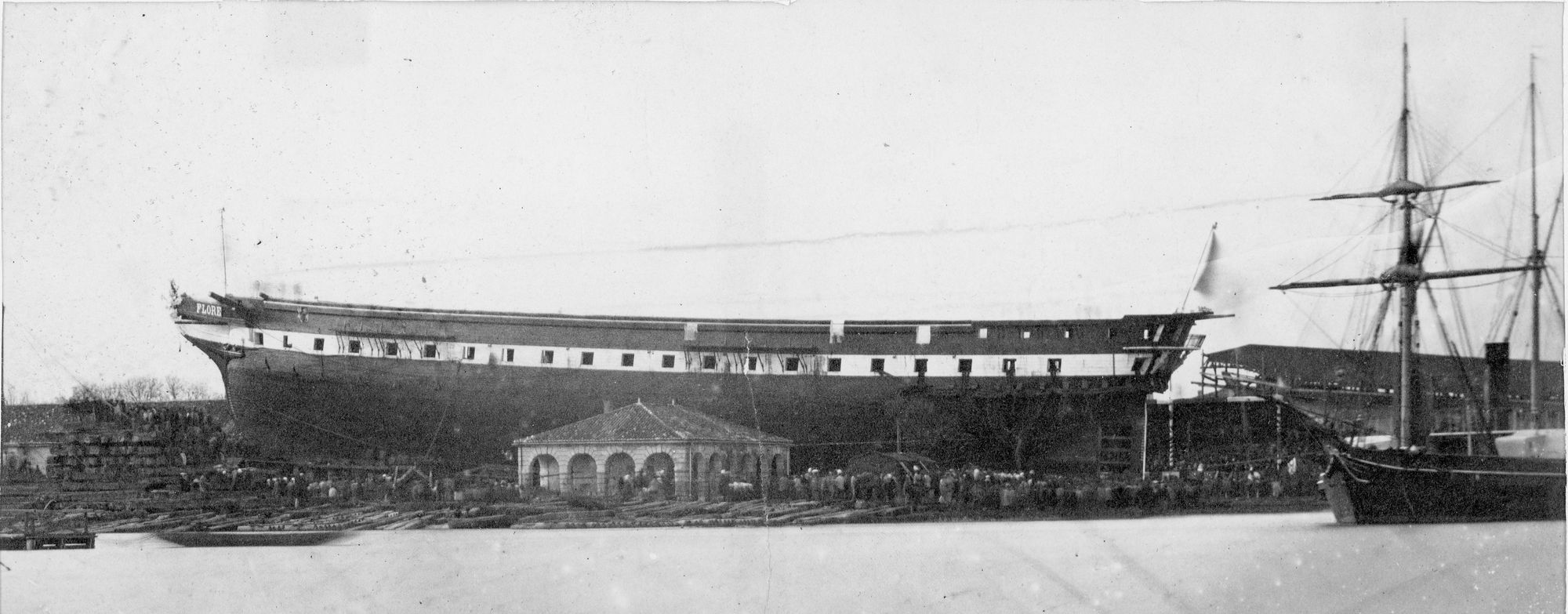
Catalogue number 104035 French frigate Flore, 1869 A small affair for the launch of the frigate Flore in 1869 at Rochefort. Note the crowds around the slip and at the bow of the ship. cm x cm Gelatin silver print |
 |
||||||||||||||||||||||||||||||||||||||||||||||||||||||||||||||||||||||||||||||||||||
|
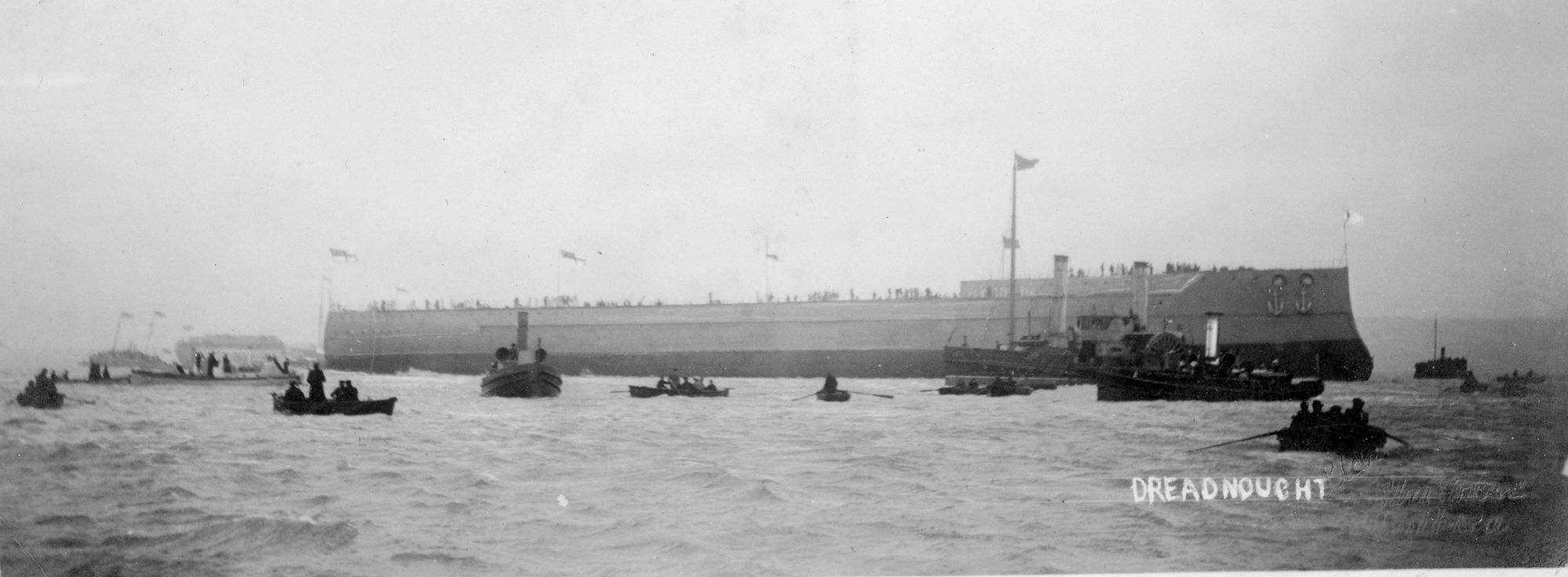
Catalogue number 108040 H.M.S. Dreadnought, 1906 H.M.S. Dreadnought was the first all-big-gun battleship in the Royal Navy and was built in a record time, laid down October 1905, launched February 1906 and commissioned in December 1906. Verso:" This is the largest battleship in the world - we went to see her launched last Saturday" in heavy black ink and franked "Portsmouth Feb 14 06" 13.2cm x 8.3m Matt gelatin silver print |
 |
||||||||||||||||||||||||||||||||||||||||||||||||||||||||||||||||||||||||||||||||||
|
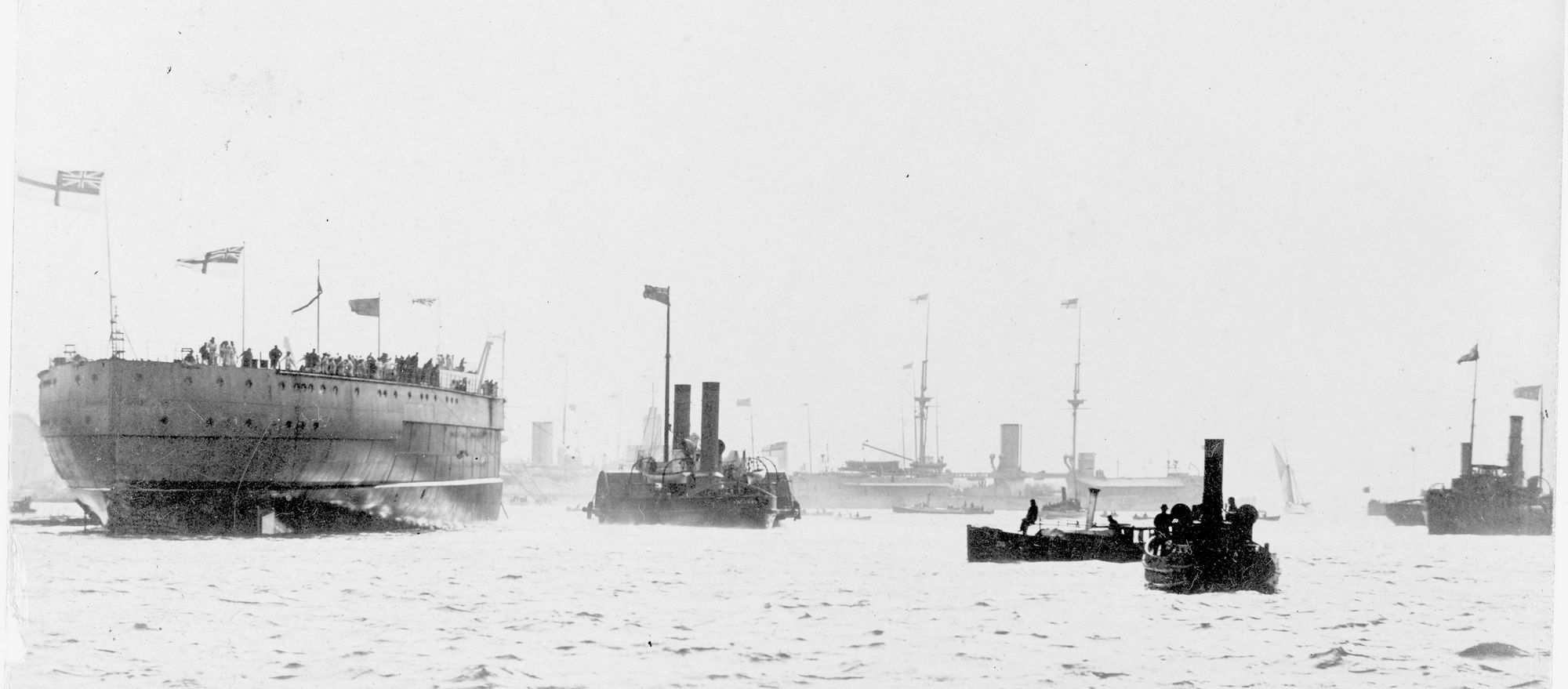
Catalogue number 145076 H.M.S. Dreadnought, 1906 The ship was christened by King Edward VII on 10th February, 1906. The launch of H.M.S. Dreadnought signalled a revolution in warship design and was a major event in naval circles worldwide. Although somewhat of a reduced event given the recent death of the Queen Alexandra's father the King of Denmark, the ceremony was a major public spectacle (similar ceremonies for H.M.S. Iron Duke, 1912, and H.M.S. Queen Elizabeth, 1913, are said to have drawn crowds of 60,000 and 80,000 respectively). Note the Colossus class turret ship in the background and the stern cradle still in place. Steam paddle tug and steam pinnace in attendance. Verso: Franked "Birmingham Aug 9 07" 13.8cm x 8.7cm Gelatin silver print |
 |
||||||||||||||||||||||||||||||||||||||||||||||||||||||||||||||||||||||||||||||||
|
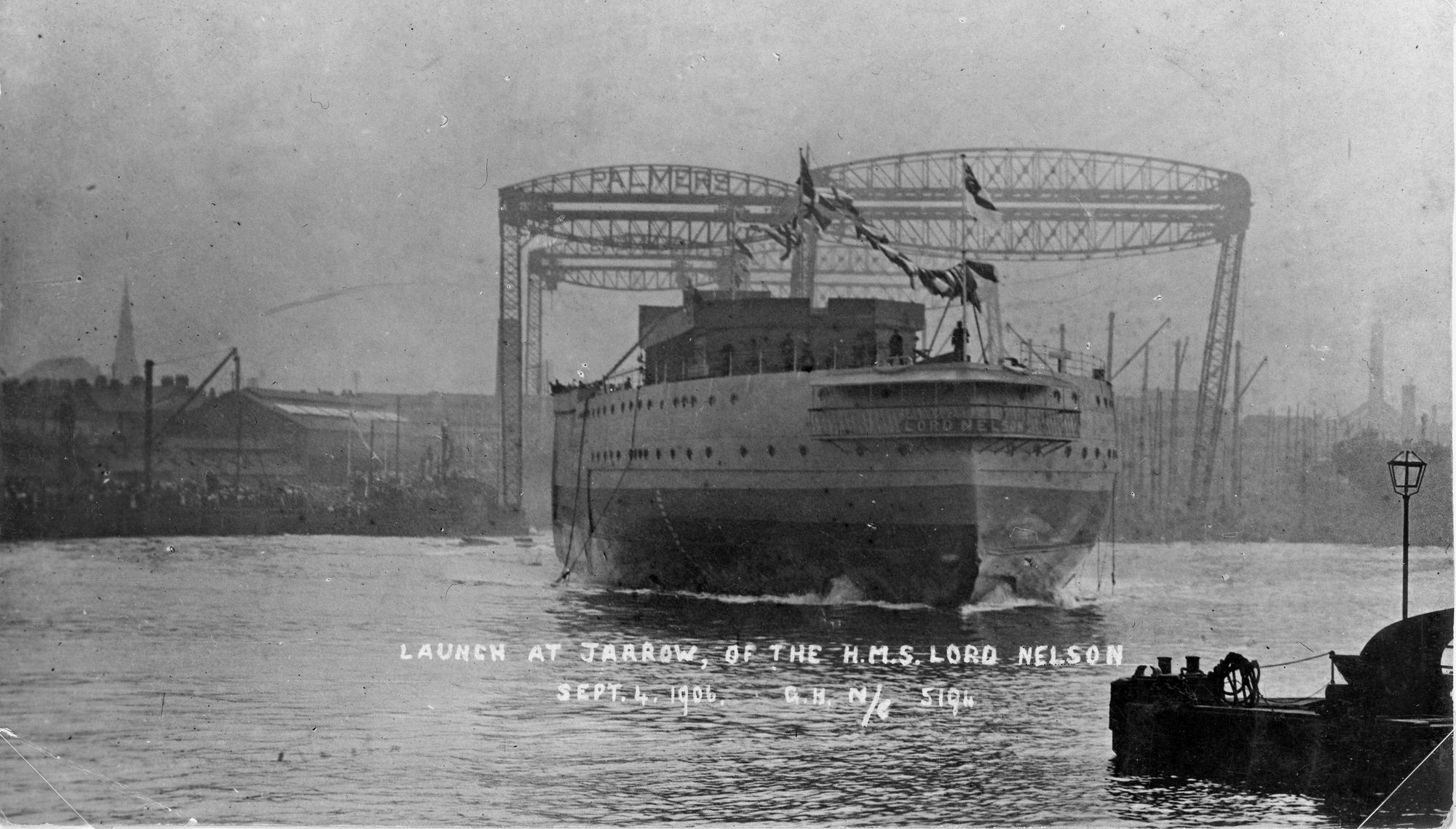
Catalogue number 155016 H.M.S. Lord Nelson, 1906 A pre-dreadnought, launched September 1906, after H.M.S. Dreadnought but laid down before, May 1905. Completion was delayed because of the appropriation of her 12-inch guns and turrets to speed-up completion of H.M.S. Dreadnought. This ship was the last pre-dreadnought to be commissioned, December 1908. 13.5cm x 8.5cm Gelatin silver print |
 |
||||||||||||||||||||||||||||||||||||||||||||||||||||||||||||||||||||||||||||||
|
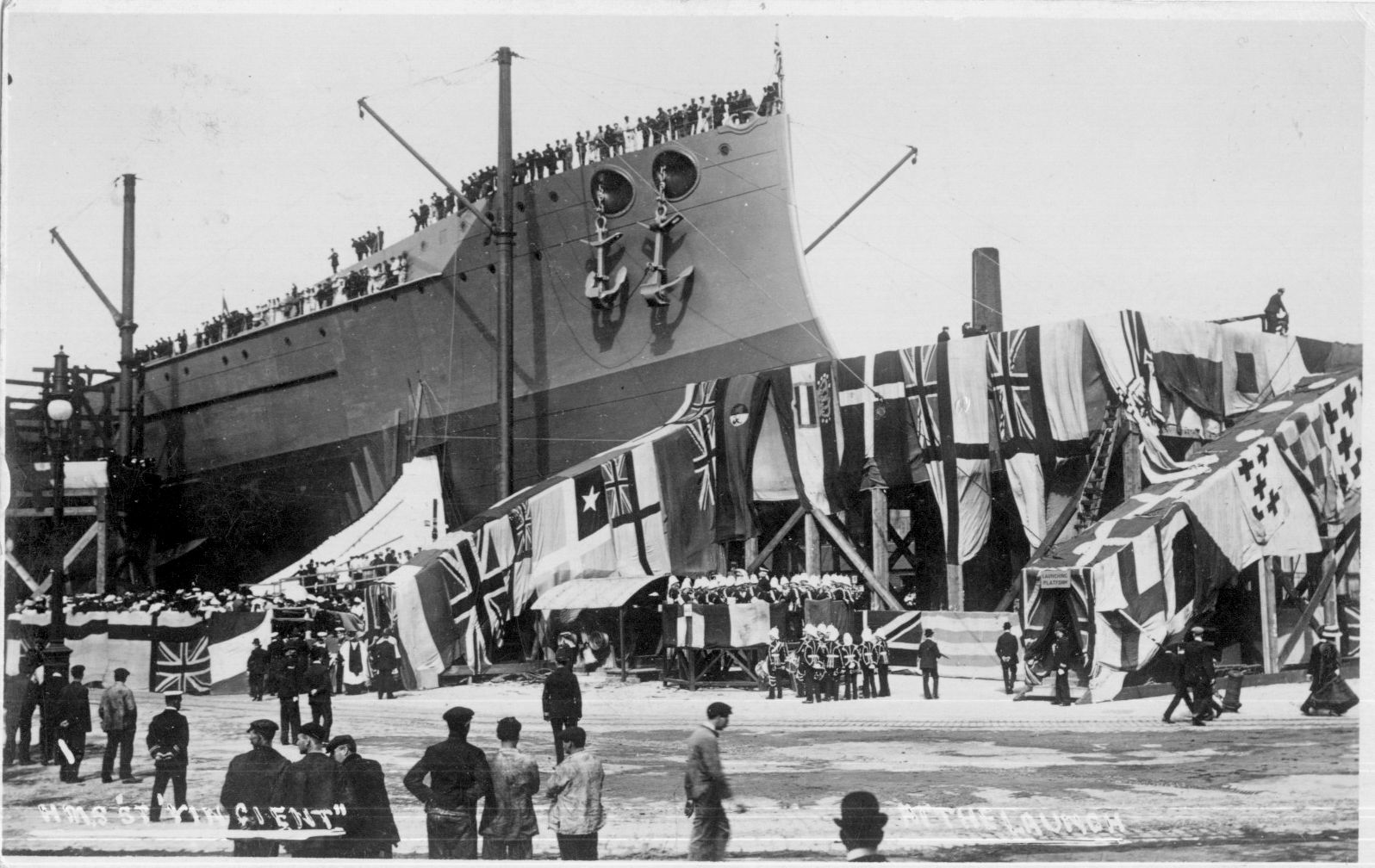
Catalogue number 92079 Launching of the dreadnought battleship St Vincent, 1908 With flags of the Empire drapped over the steps and the platform, everyone is waiting for the arrival of the invited VIP guests. From left to right, note the public in the raised enclosure, the priest at the entrance of the first set of stairs, the band of the Royal Marines on a raised platform between the two starcases and the entrance to the second set of stairs marked "Launching platform". Note also the lady on foot extreme right. Dockyard workers are lokking down from the ship's rails. Verso: Sent from Portsmouth to an address in Brussels, "Daisy" to "Charles", franked "SP 25 08". 13.3cm x 8.3cm Gelatin silver print |
 |
|
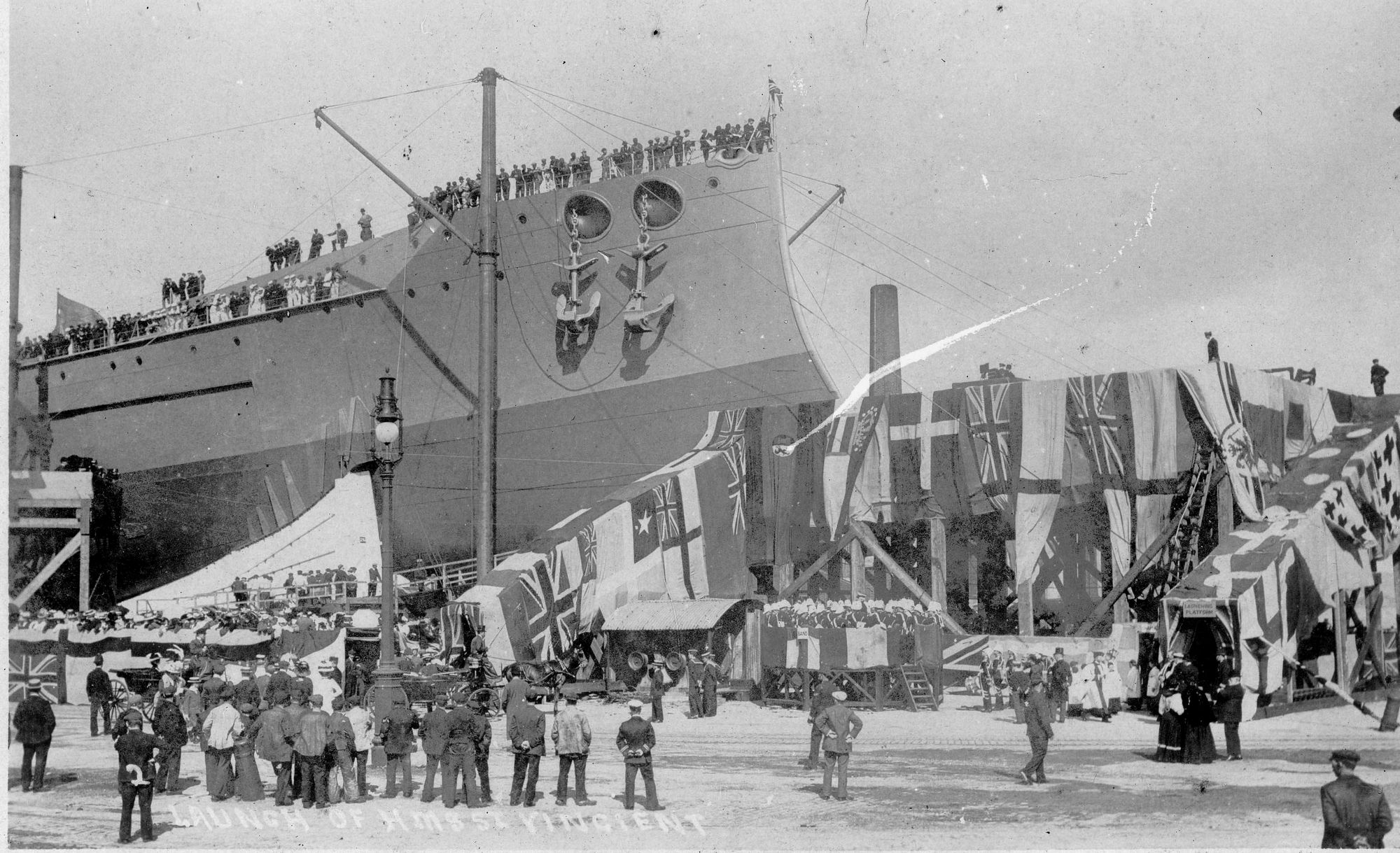
Catalogue number 102032 Launching of the dreadnought battleship St Vincent, 1908 Coaches are now arriving with the guests for the launching, ladies with their fanciful hats and the public in the enclosure look over at the scene. The priest and the altar boys are now by the staircase to the launching platform, navy officers check everything up on the launching platform. 13.4cm x 8.3cm Gelatin silver print |
 |
||||||||||||||||||||||||||||||||||||||||||||||||||||||||||||||||||||||||||
|
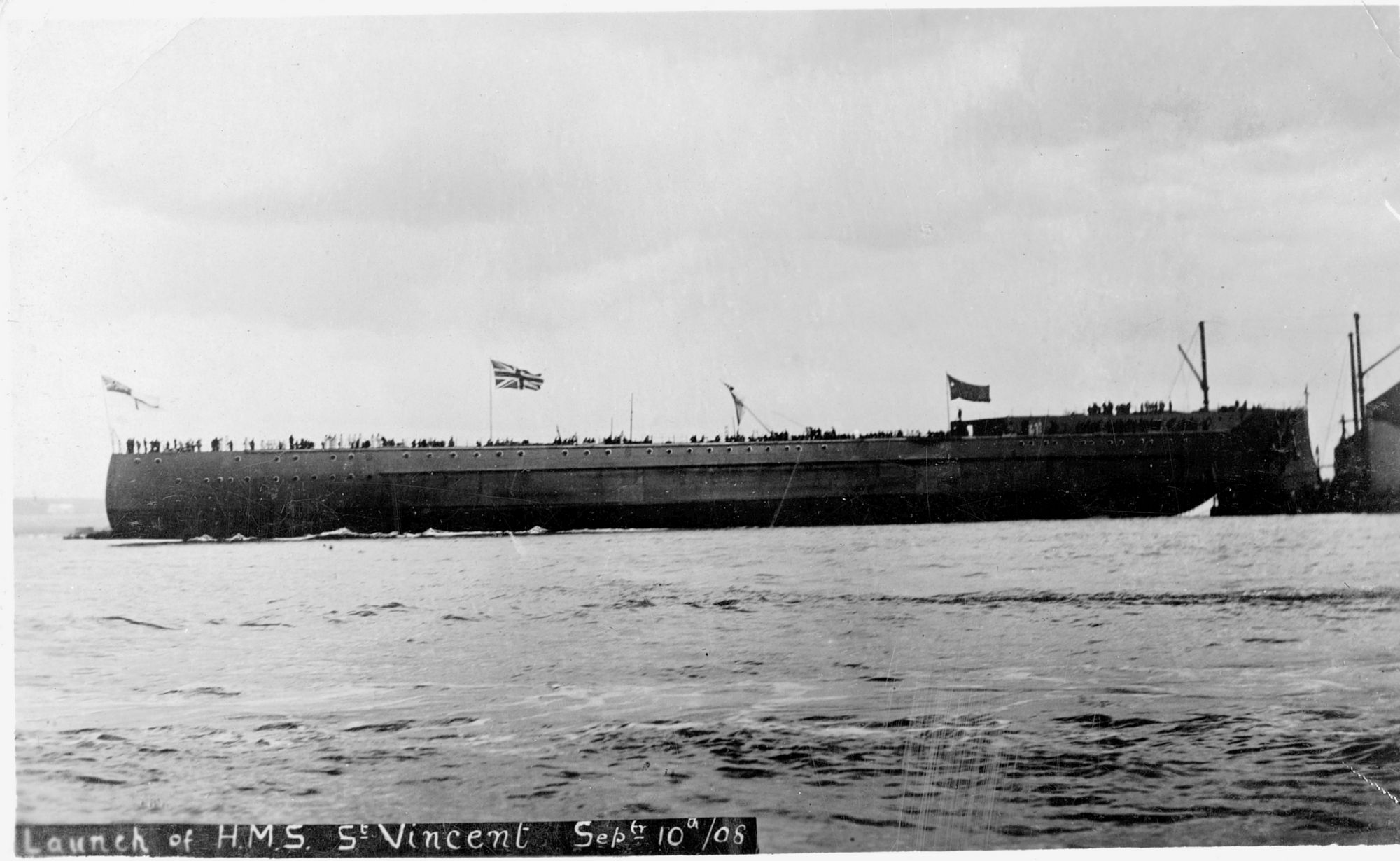
Catalogue number 41296 Launching of the dreadnought battleship St Vincent, 1908 The ship is in the water, the forward cradle is still in place. As an empty hull, she is floating high. 13.4cm x 8.1m Gelatin silver print |
 |
|
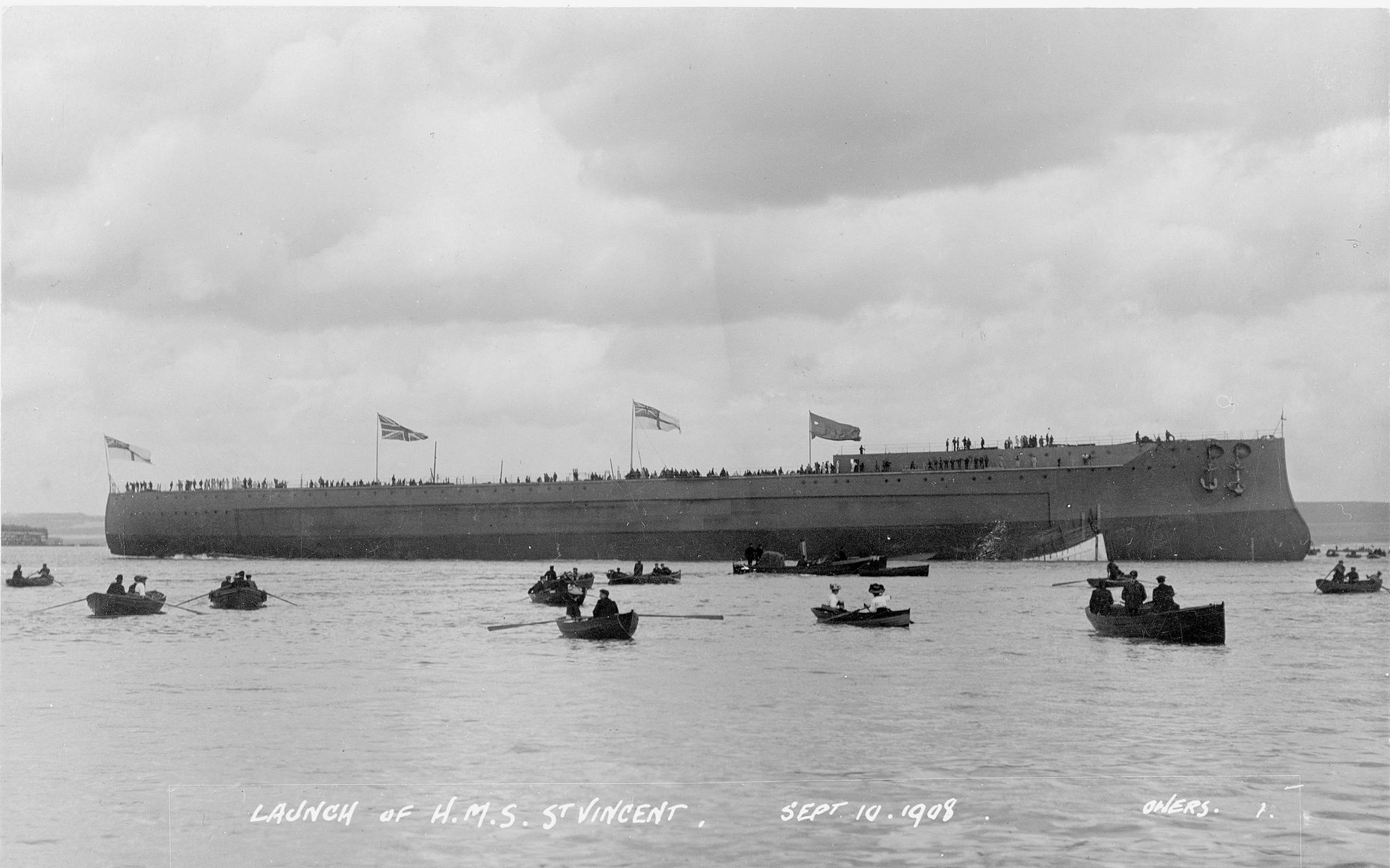
Catalogue number 126012 Launching of the dreadnought battleship St Vincent, 1908 -The ship has gone down the slip and a fleet of rowing boats gather around the ship, note center a lady being rowed and just right of center is a rowing boat with a crew of two ladies in white blouses and large flowery hats. 13.7cm x 8.6cm Gelatin silver print |
 |
||||||||||||||||||||||||||||||||||||||||||||||||||||||||||||||||||||||
|
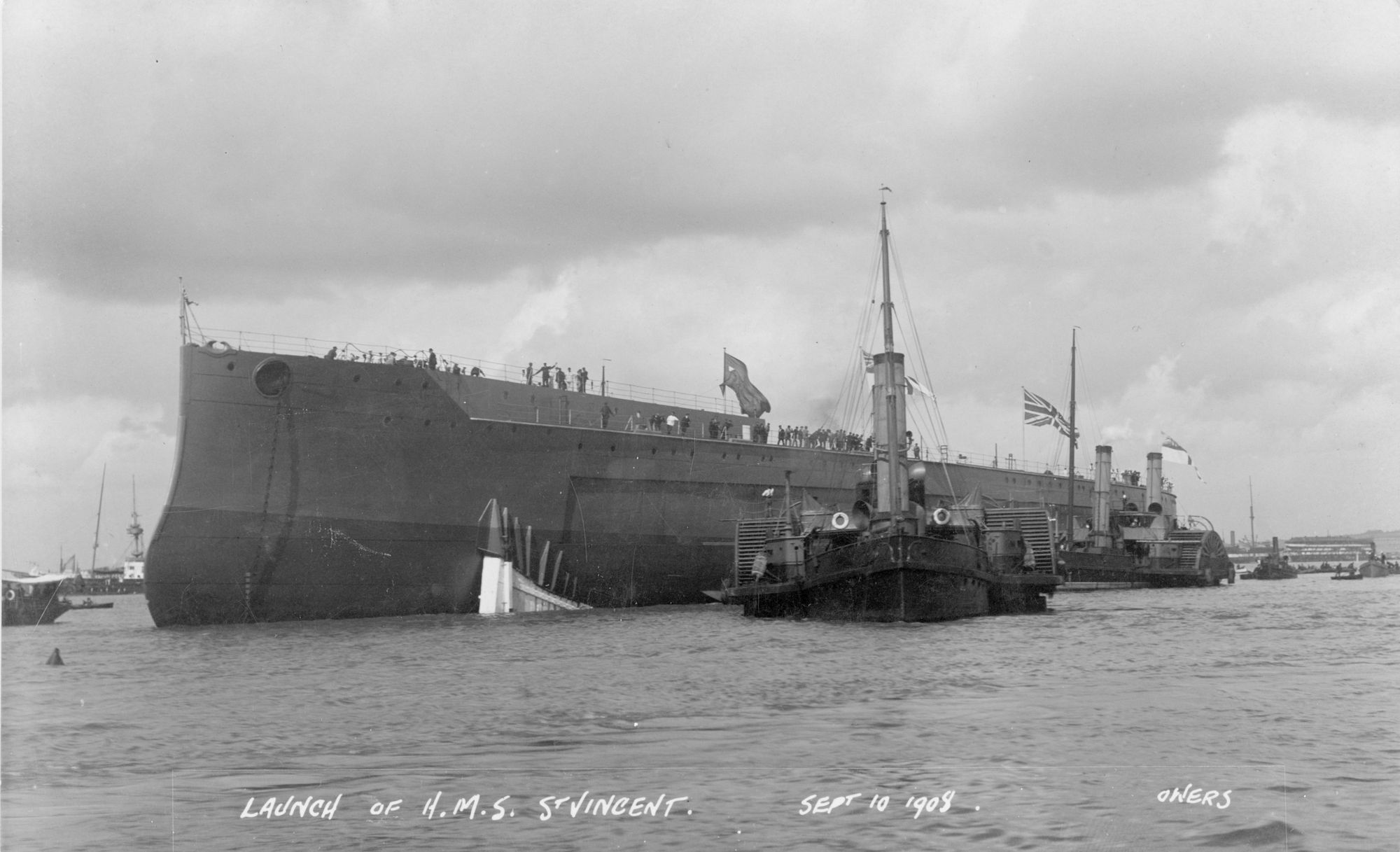
Catalogue number 123011 Launching of the dreadnought battleship St Vincent, 1908 One of a series of three photographs taken at the same time of H.M.S. St Vincent once launched. Like caring mothers with a newborn, paddle tugs fuss around the ship ready to take it to the fitting-out bay. 13.7cm x 8.5cm Gelatin silver print |
 |
||||||||||||||||||||||||||||||||||||||||||||||||||||||||||||||||||||
|
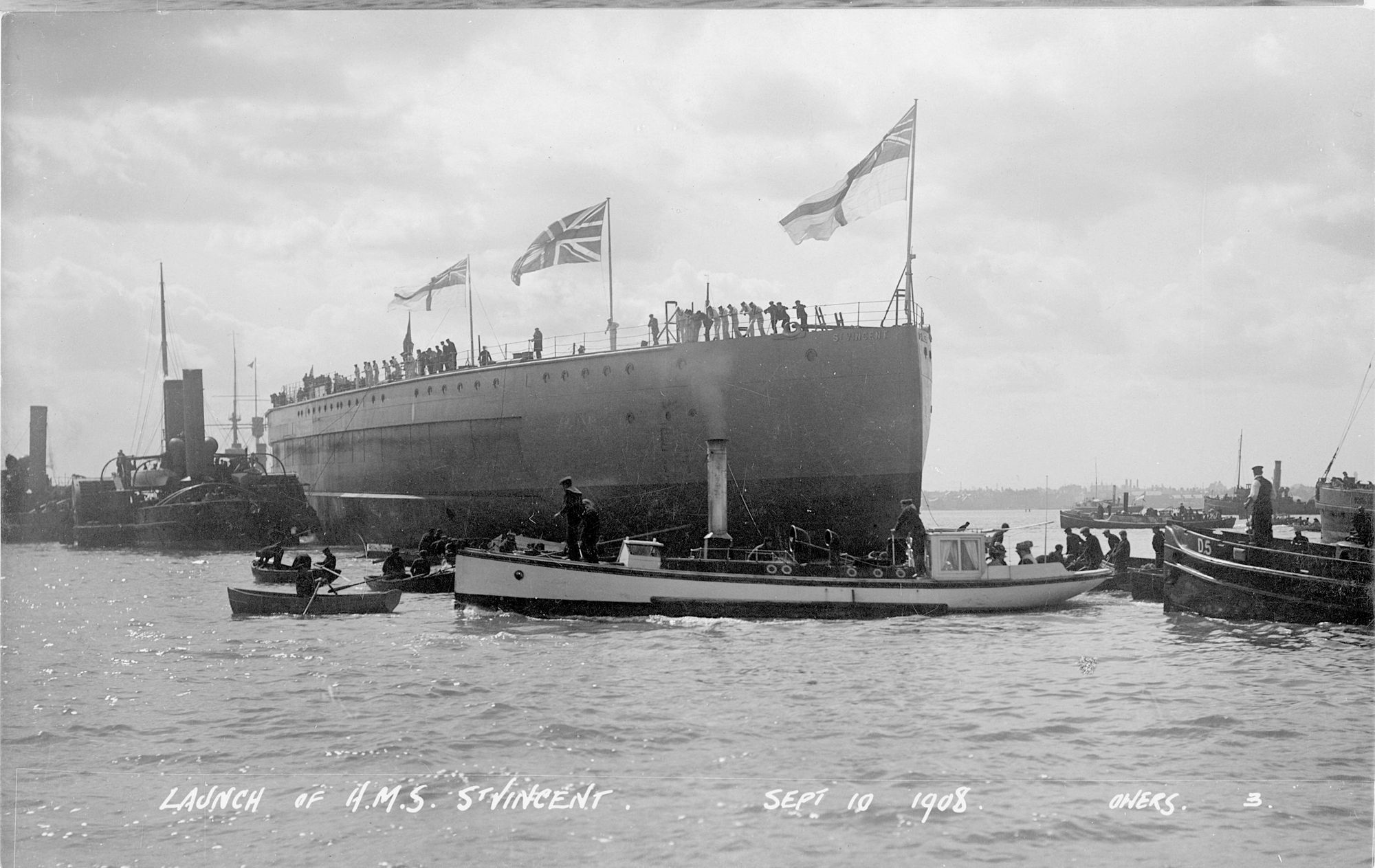
Catalogue number 126010 Launching of the dreadnought battleship St Vincent, 1908 View from the port stern. Dockyard workmen in rowing boats collect floating wood and waste from the launch. An Admiral's barge takes several ladies to see the huge warship close-up, a second pinnace can be seen in the mid-background. 13.6cm x 8.6cm Gelatin silver print |
 |
||||||||||||||||||||||||||||||||||||||||||||||||||||||||||||||||||
|
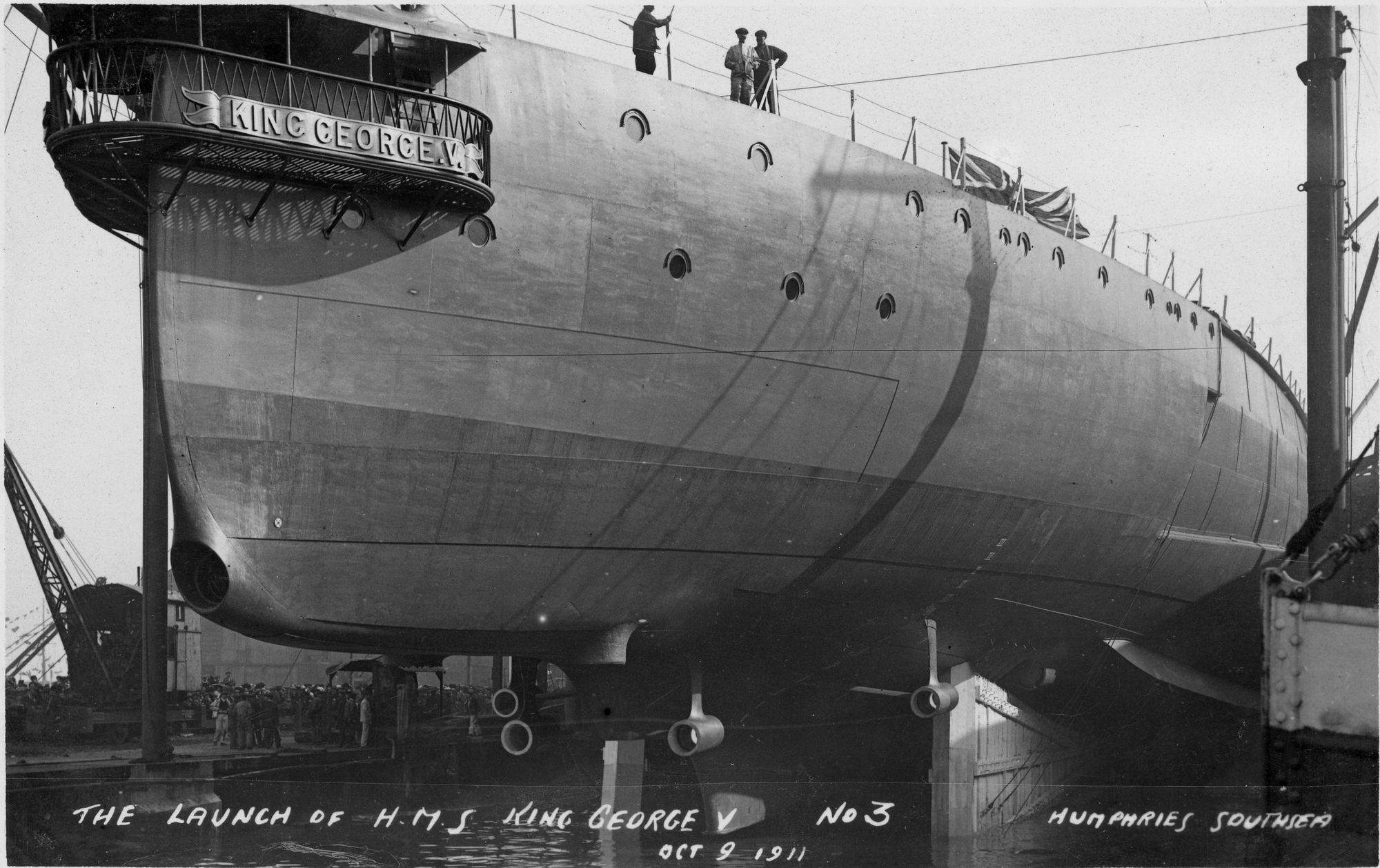
Catalogue number 136050 Launch of H.M.S. King George V, October 1911 Stern view of H.M.S. King George on the slip just prior to launching. Note the Captain's stern walkway, the groove to take the armour plating along the hull, stern torpedo tube, four propeller A-frames and dockyard workmen on the quayside. 13.3cm x 8.3cm Gelatin silver print |
 |
||||||||||||||||||||||||||||||||||||||||||||||||||||||||||||||||
|
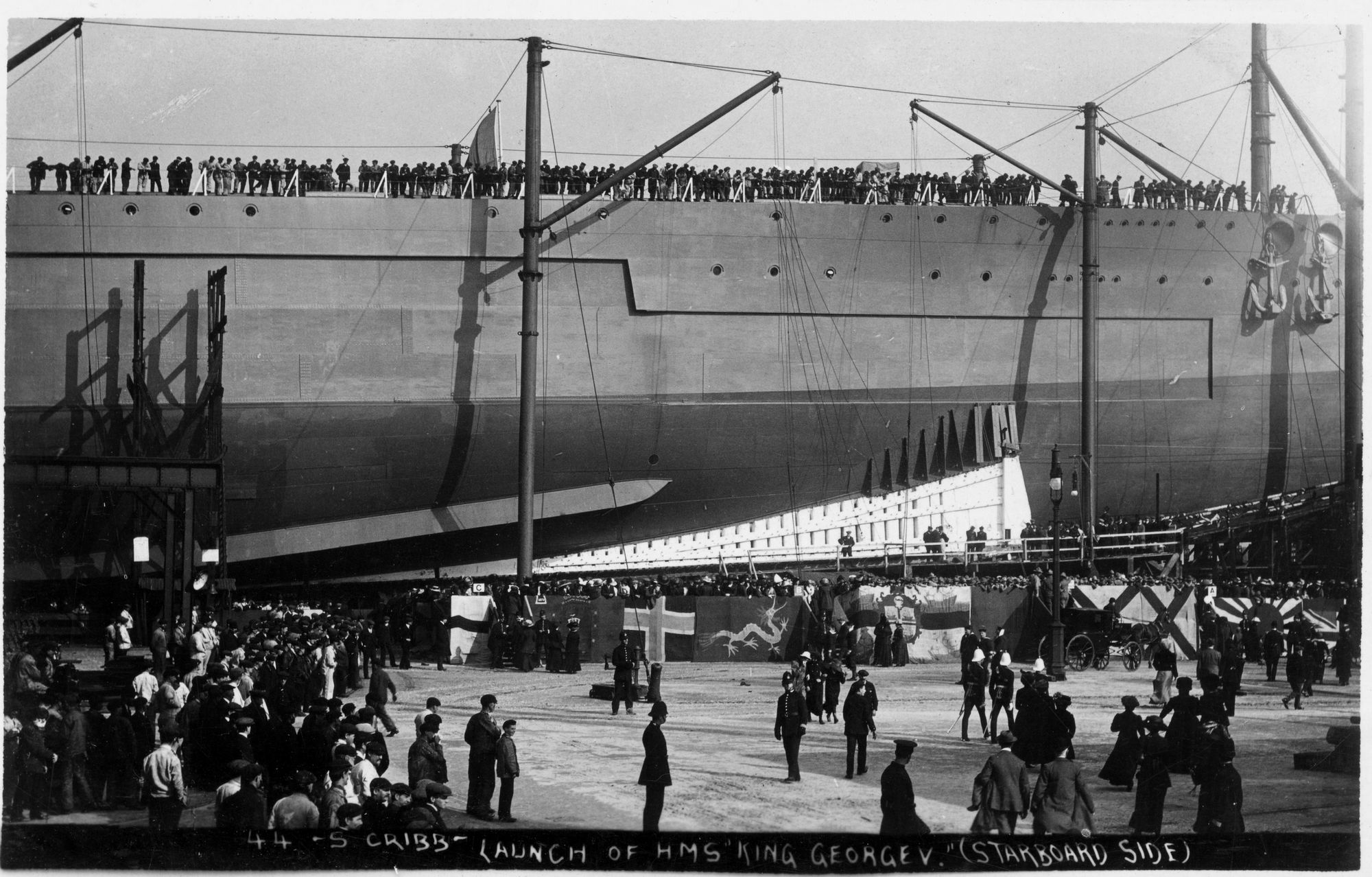
Catalogue number 24043 Launch of H.M.S. King George V, October 1911 A busy scene for the launching ceremony, general public around the slip and a police presence, carriages arriving with guests and crowds in the enclosure. Dockyard workmen are up on the rails of the ship. We can seen the riveted hull before the armour plate is fixed in place. 13.3cm x 8.3m Gelatin silver print |
 |
||||||||||||||||||||||||||||||||||||||||||||||||||||||||||||||
|
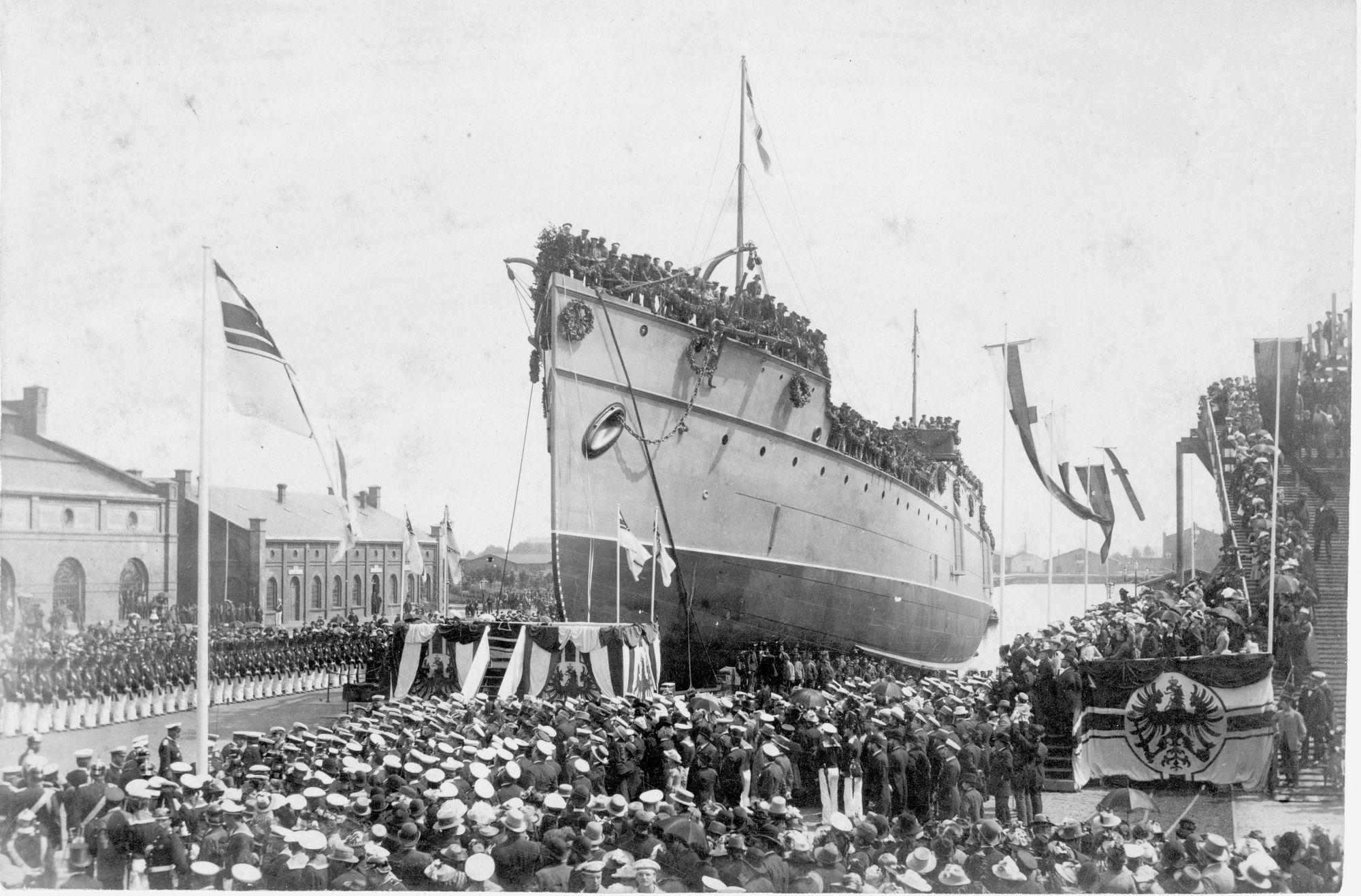
Catalogue number 141056 Imperial German Navy mine transport and layer Pelikan Whilst not a particulary important addition to the ever-grown Imperial German Navy, the launch of Pelikan can be seen to be an elaborated ceremony with large crowds gathering around the slipway. Kaiser Wilhelm II wanted everything done to popularise his new naval force and so make the bill more acceptable. Pelikan was built to carry but not lay up to 400 mines. 18.7cm x 12.5cm Mounted albumen print |
 |
||||||||||||||||||||||||||||||||||||||||||||||||||||||||||||
|
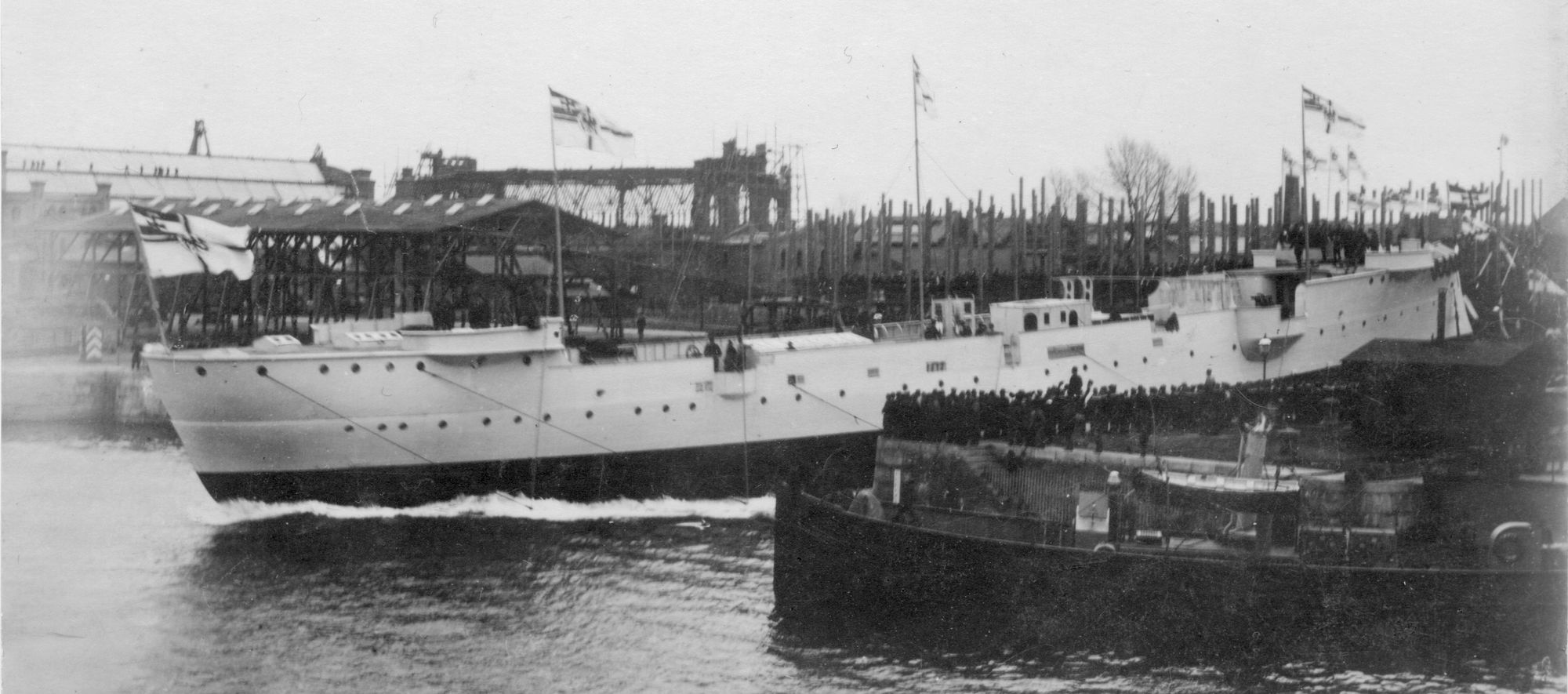
Catalogue number 17002 I.M.S. Falke, 1891 Around the end of the 19th century, Germany began to acquire overseas colonies and Falke was a light cruiser built for colonial work. A barquentine rig helped to reduce coal consumption when cruising and the hull had wooden sheathing against marine fouling. **** 16.9cm x 11.2 cm Matt gelatin silver print |
 |
||||||||||||||||||||||||||||||||||||||||||||||||||||||||||
|
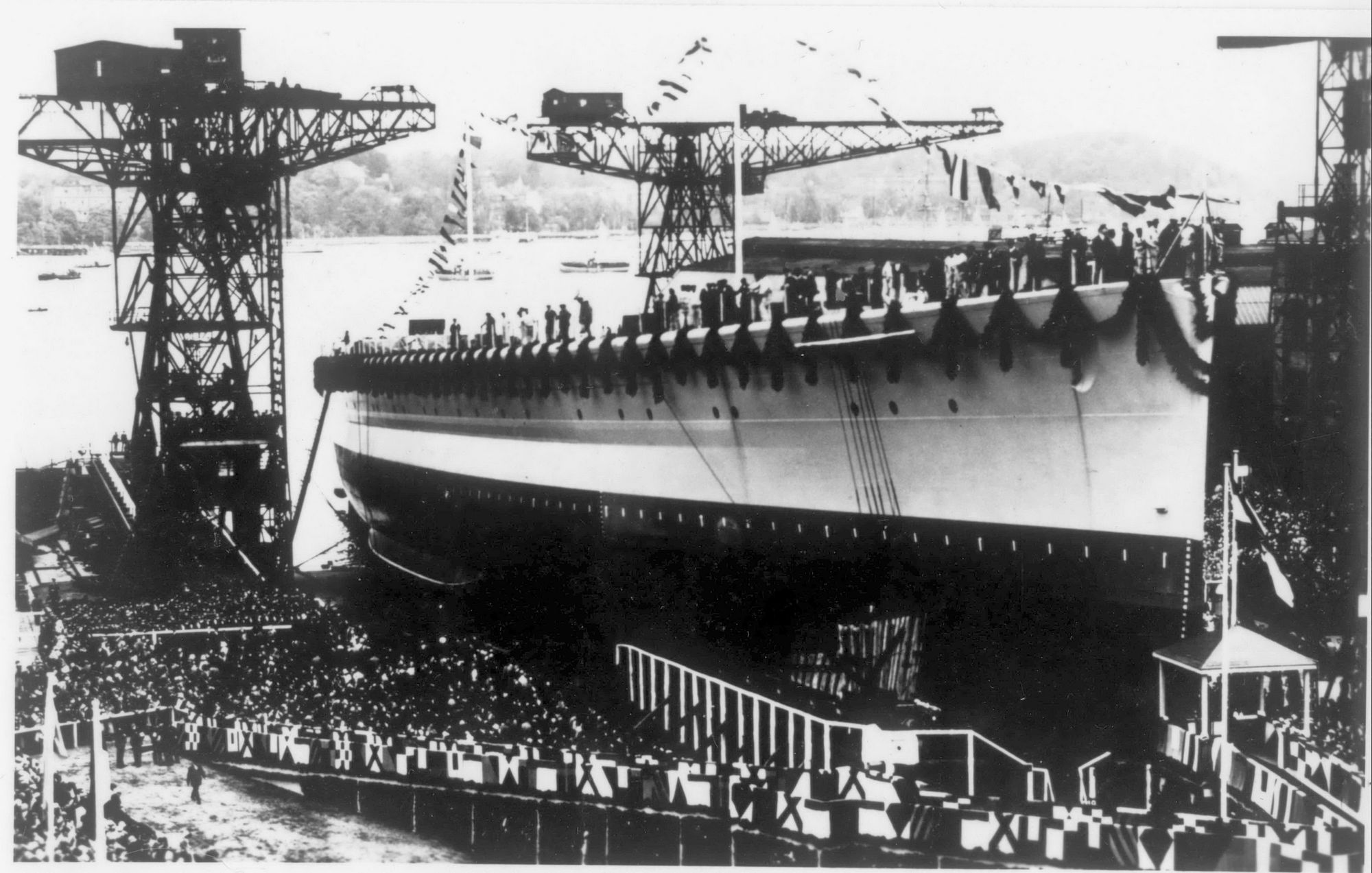
Catalogue number 37157 Launch of German heavy cruiser Deutschland, 1931 No more so than in Germany of the 1930s was national propaganda rampant at the massive public event associated with the launch of a warship. Even the name of the ship was changed in 1940, from a propaganda point of view, it would not be good for a warship with such a prestigious name be eventually sunk by the enemy. Credit:Droppel 13.3cm x 8.2cm Gelatin silver print |
 |
||||||||||||||||||||||||||||||||||||||||||||||||||||||||
|
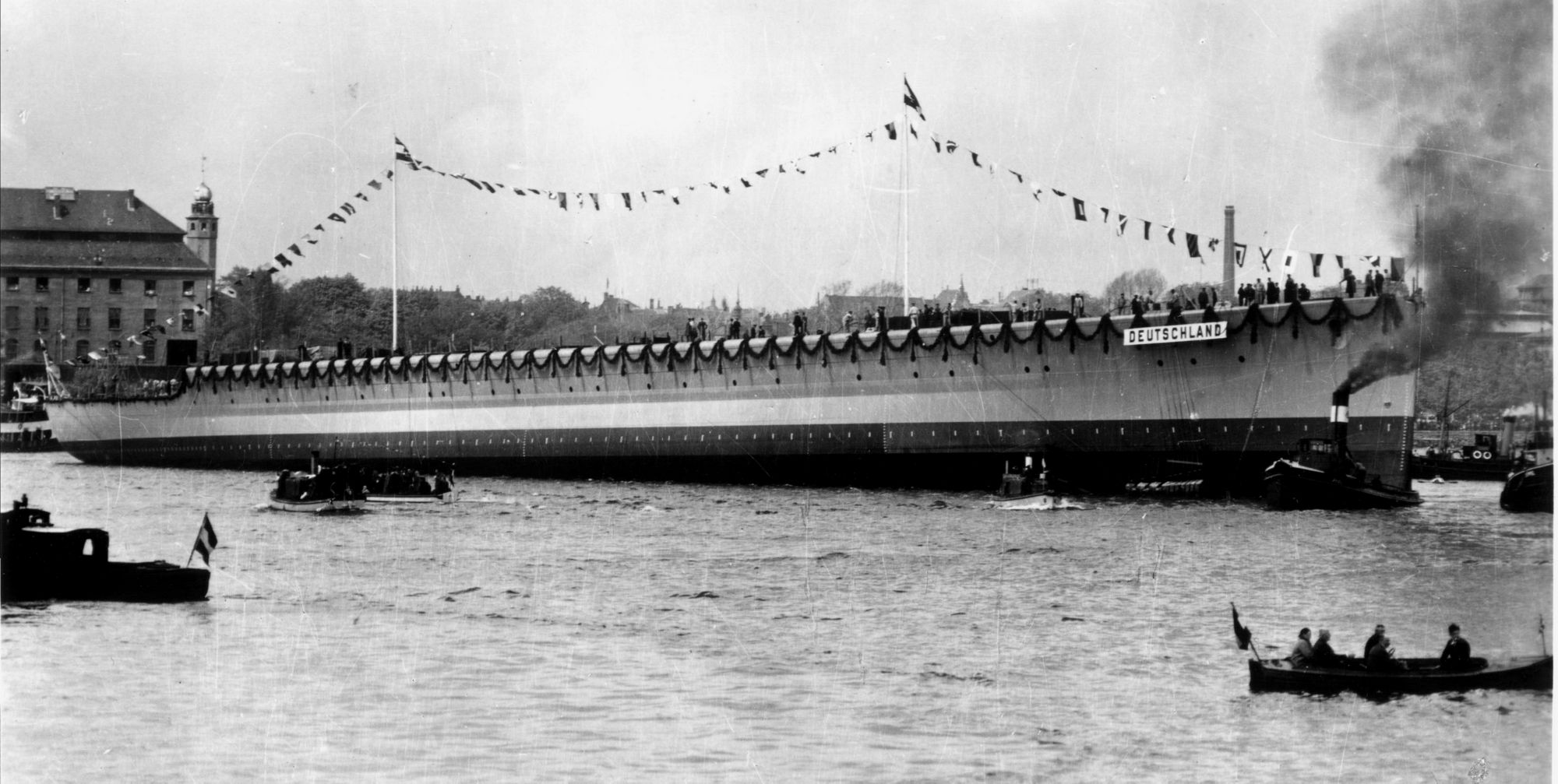
Catalogue number 37158 Launch of German heavy cruiser Deutschland, 1931 Deutschland accidentally went down the slip with decorations and all during the christening speech and before the German President Paul von Hindenburg could christen the ship by smashing a bottle of wine against the bow. In the world of naval superstition such an event could be seen as a bad omen for the ship. Credit:Droppel 13.3cm x 8.2cm Gelatin silver print |
 |
|
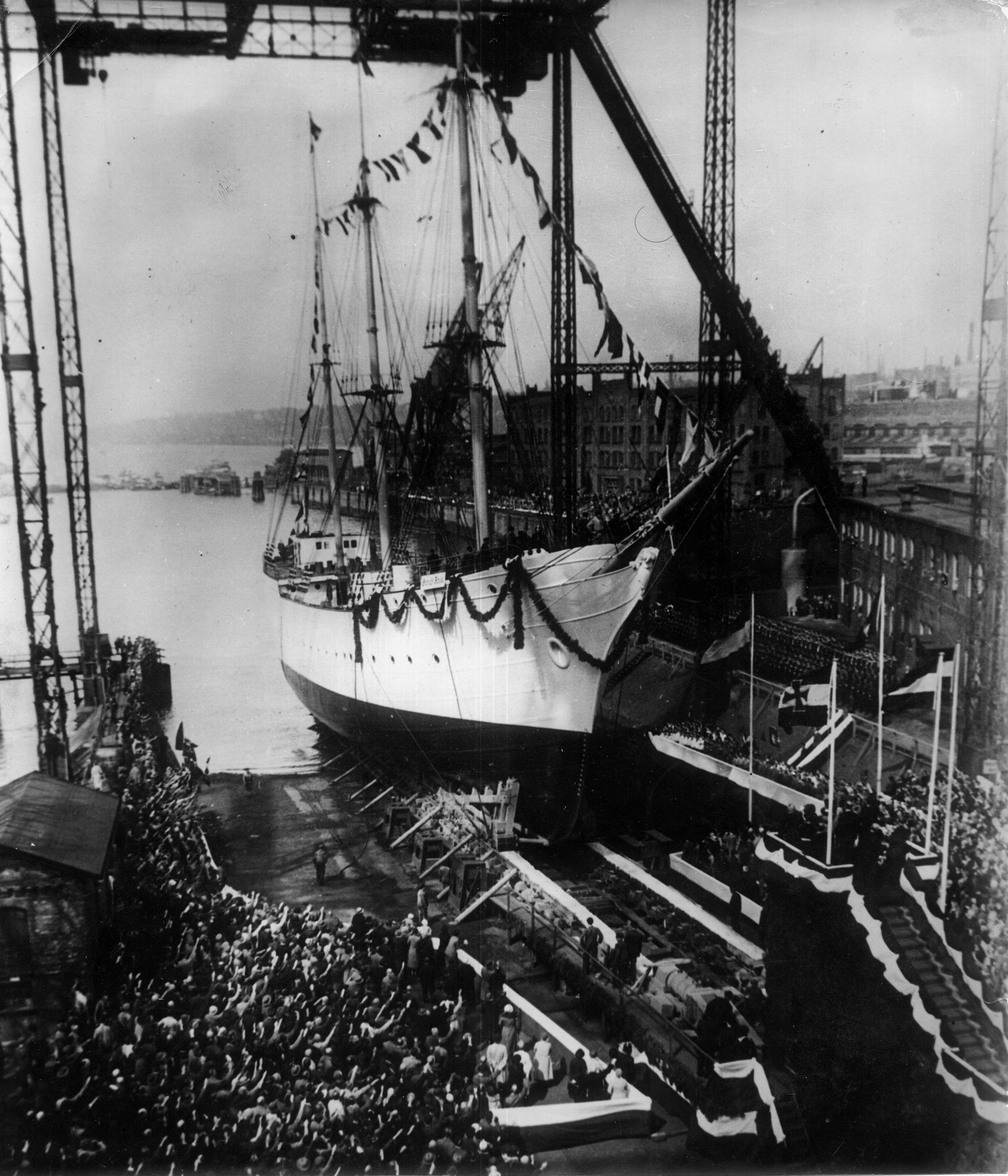
Catalogue number 59012 German Training ship Gorch Foch, 1933 This steel-hulled, three-masted barque had a long and varied career going from the German Navy to the Soviets post-war then to Ukraine with the fall of the Soviet Union in 1991, then from 1994 spending five year moored in Middlesbrough, England awaiting restoration before returning to Germany and restoration from 1999. We can see that the launch in 1933 was an important propaganda event for the Nazi Party, the crowds giving the Nazi salute as the ship goes down the slipway. 18.1cm x 21cm Gelatin silver print |
 |
|
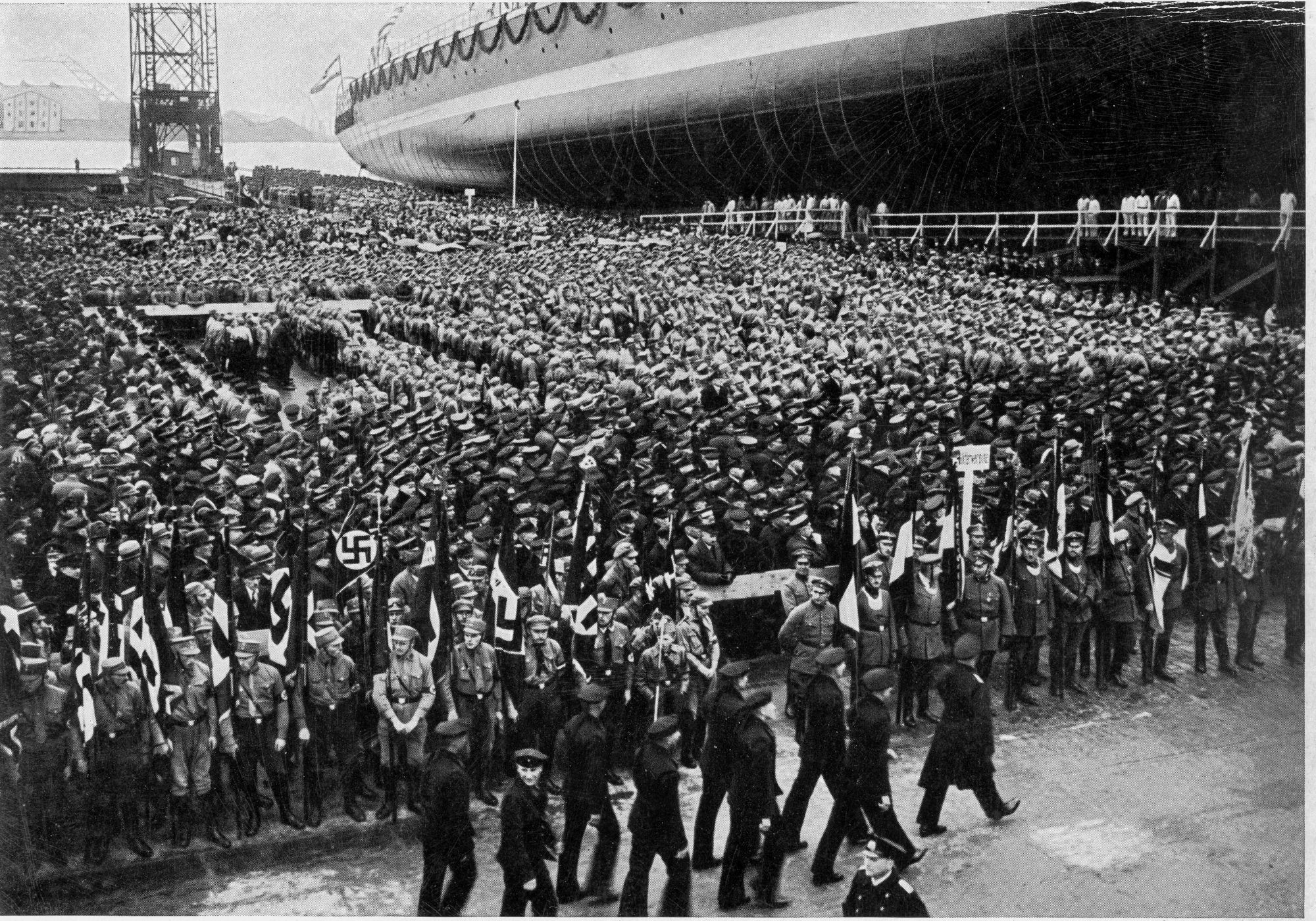
Catalogue number 156021 Deutschland- class heavy cruiser Admiral Scheer, 1933 The Admiral Scheer was a successful commercial raider fully justifying the construction of the Deutschland-class heavy cruisers/pocket battleships to scour the commercial seaways hunting for enemy commerical shipping. Only when confronted with a powerful enemy fleet were they overwhelmed. Here is an amazing display of national pride with a huge military presence. Verso:" Germany awakes. Launch of Panzercruiser "Admiral Scheer", 1933....The NSDAP’s Reich Photojournalist, Heinrich Hoffmann, provided the extensive image material and undertook the artistic processing of the reproductions. The numerous full-page illustrations in the book and the panorama of the standard consecration during the last Reich Party Congress in 1933 convey with overwhelming force the magnitude of the events of our time...." part of German Gothic text 16.4cm x 11.4cm Gelatin silver print |
 |
|
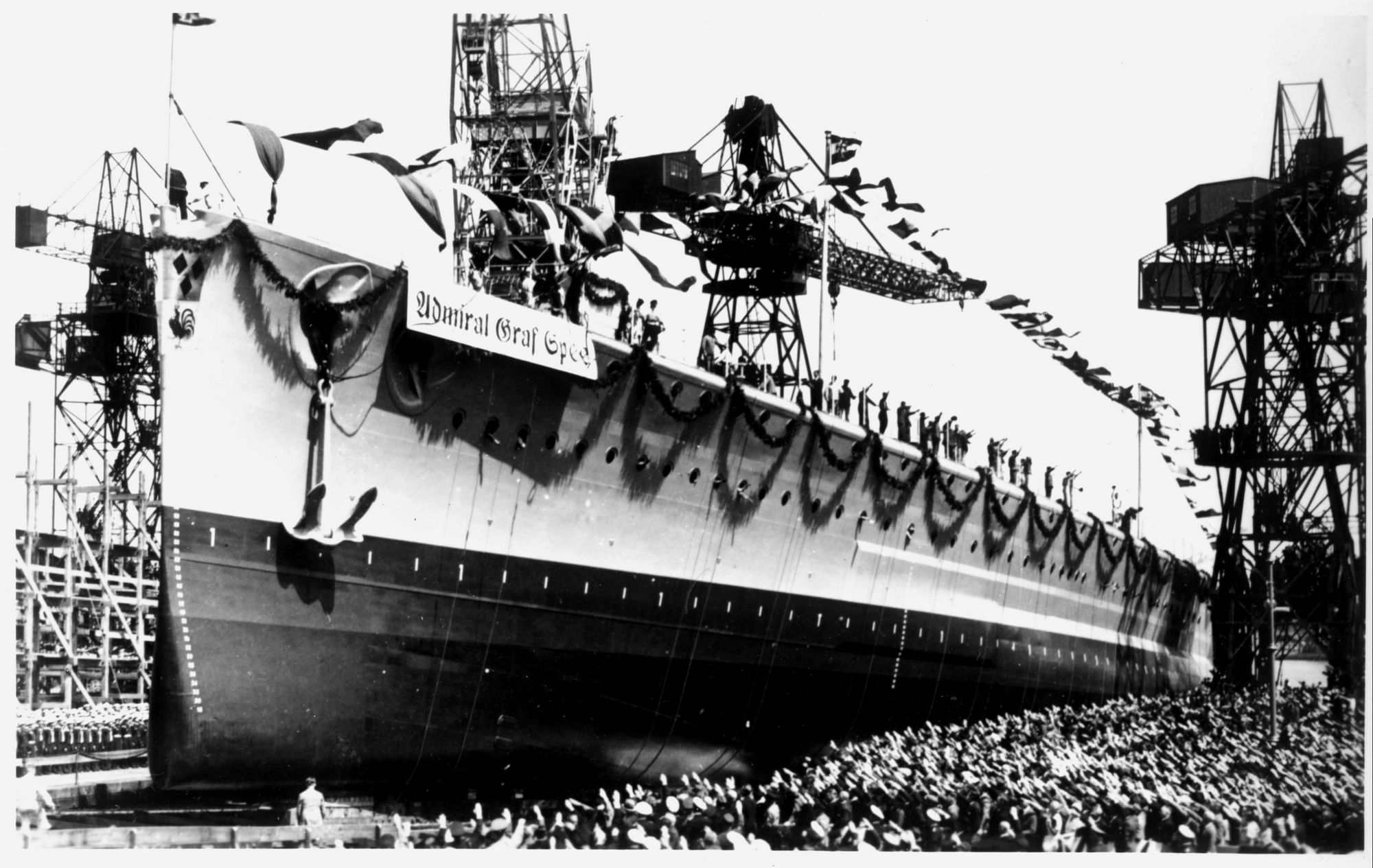
Catalogue number 37162 Launch of the Admiral Graf Spee, 1934 Advances in electric welding and diesel marine engines enabled Germany to produce three "pocket battleships". Heavily armed but thinly protected, the concept was to have a ship stronger than any faster warship and faster than any stronger warship. The British answer was the battlecruiser. Credit:Droppel 13.3cm x 8.2cm Gelatin silver print |
 |
| The flags are out on the grandstand and the launching platform is already decorated
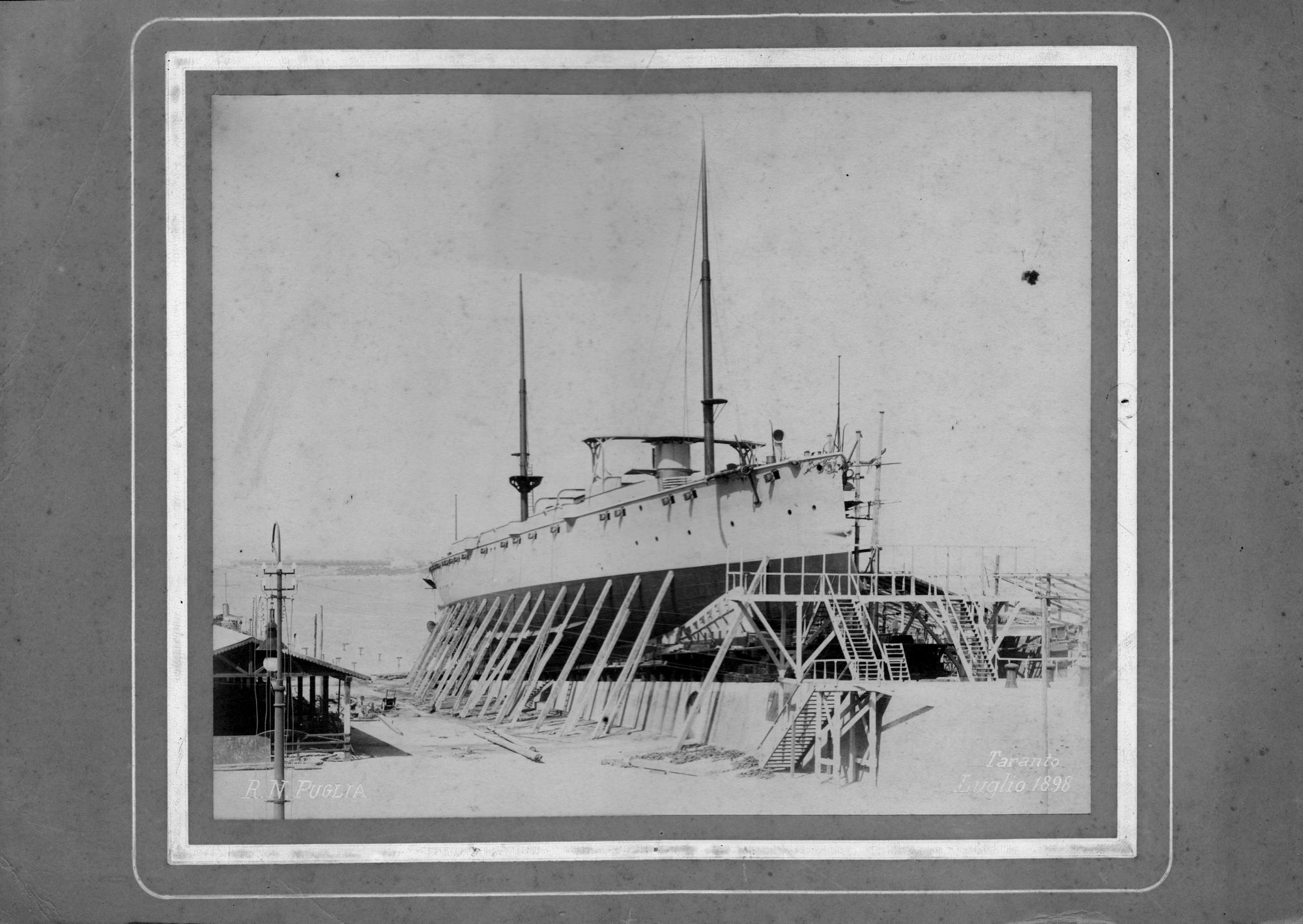
Catalogue number 86 F bis Taranto, 1898, launch of the Italian protected cruiser Puglia Puglia was one of a class of five Umbria class protected cruisers. Note the fore and aft rig.The flags are out on the grandstand and the launching platform is alreadt decorated Recto:"R.N. Puglia Taranto Luglio 1898" in white ink 25.3cm x 20.7cm Mounted albumen print |
 |
|
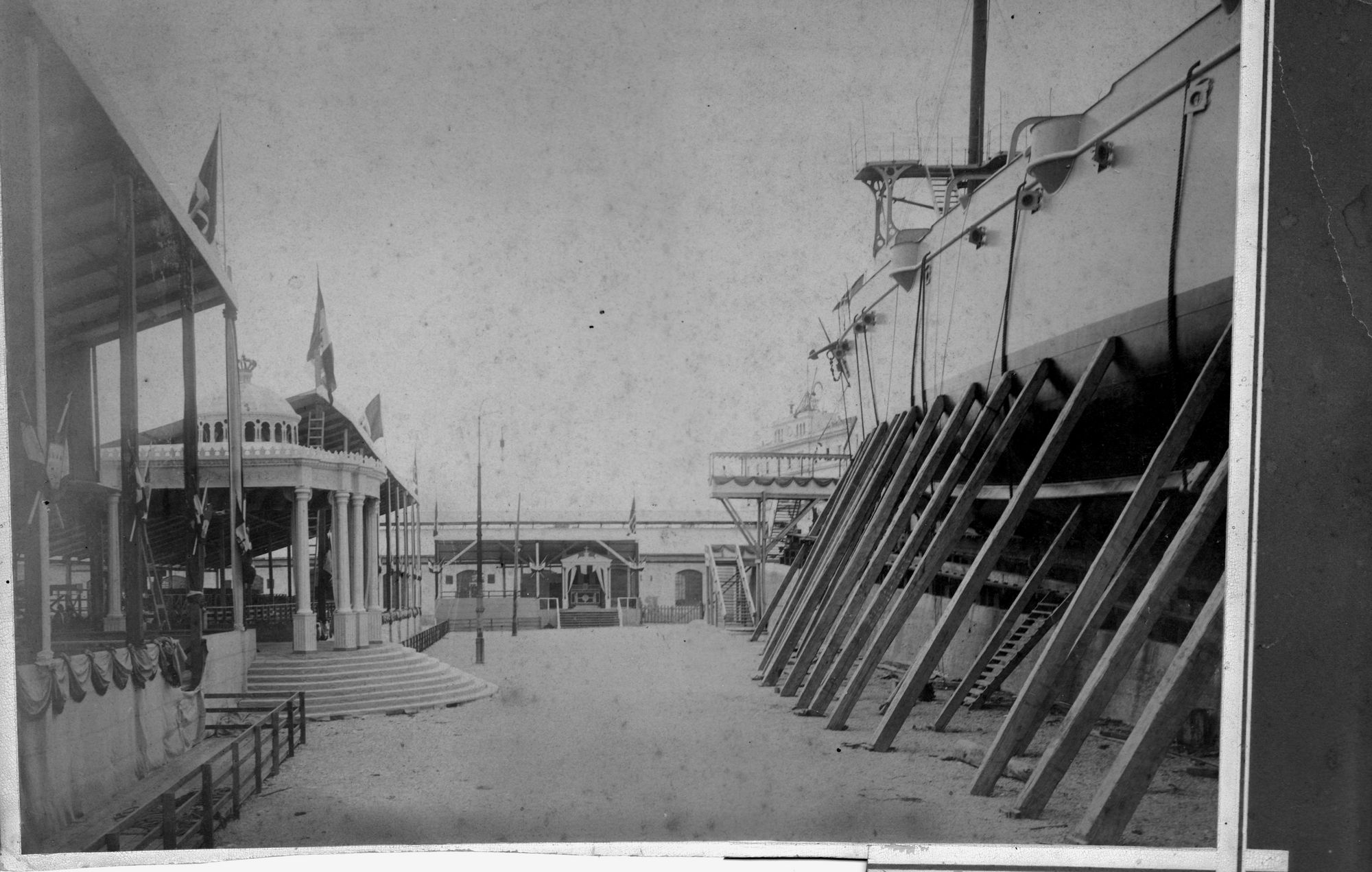
Catalogue number 86 F1bis Taranto, 1898, launch of the Italian protected cruiser Puglia The flags are out on the grandstand and the launching platform is already decorated. Recto:"To the noble Lady Guilia Satrinano/Satriamo(?) as a souvenir of the launch of Puglia 22 July 1898" in Italien and in fine black ink 30.6cm x 20.9cm Mounted albumen print |
 |
|
Catalogue number 114015 Lauch of the cruiser Morano, 1903 The cruiser Morano was built for the Royal Italian Navy in the Gio. Ansaldo & C. shipyard, Sestri Ponente, Italy but was sold to the Argentine Navy whilst on the stocks. She was then sold on to and completed for the Imperial Japanese Navy in response to the increased tension with Russia. She was renamed Kasuga. Recto:"Here, Madame the Vicomtesse one of the battleships aquired by Japan before the beginning of hostilities. As you can see, it is the Argentine flag that is in place with its celestial colours of sky blue, white and sky blue, but today it flies the flag of the Empire of the Rising Sun under the name of "Kasuga" Buenos Aires 15 4 1905" in French and in fine black ink. "Sestri Ponente 9th February 1903 launch of the argentine cruiser "Moreno" Sciutto, Genova" in white printed text Verso:Postcard sent from Buenos Aires in 1905 to the Vicomtesse de Bire, Laval 13.6cm x 8.6cm Matt gelatin silver print |
 |
|
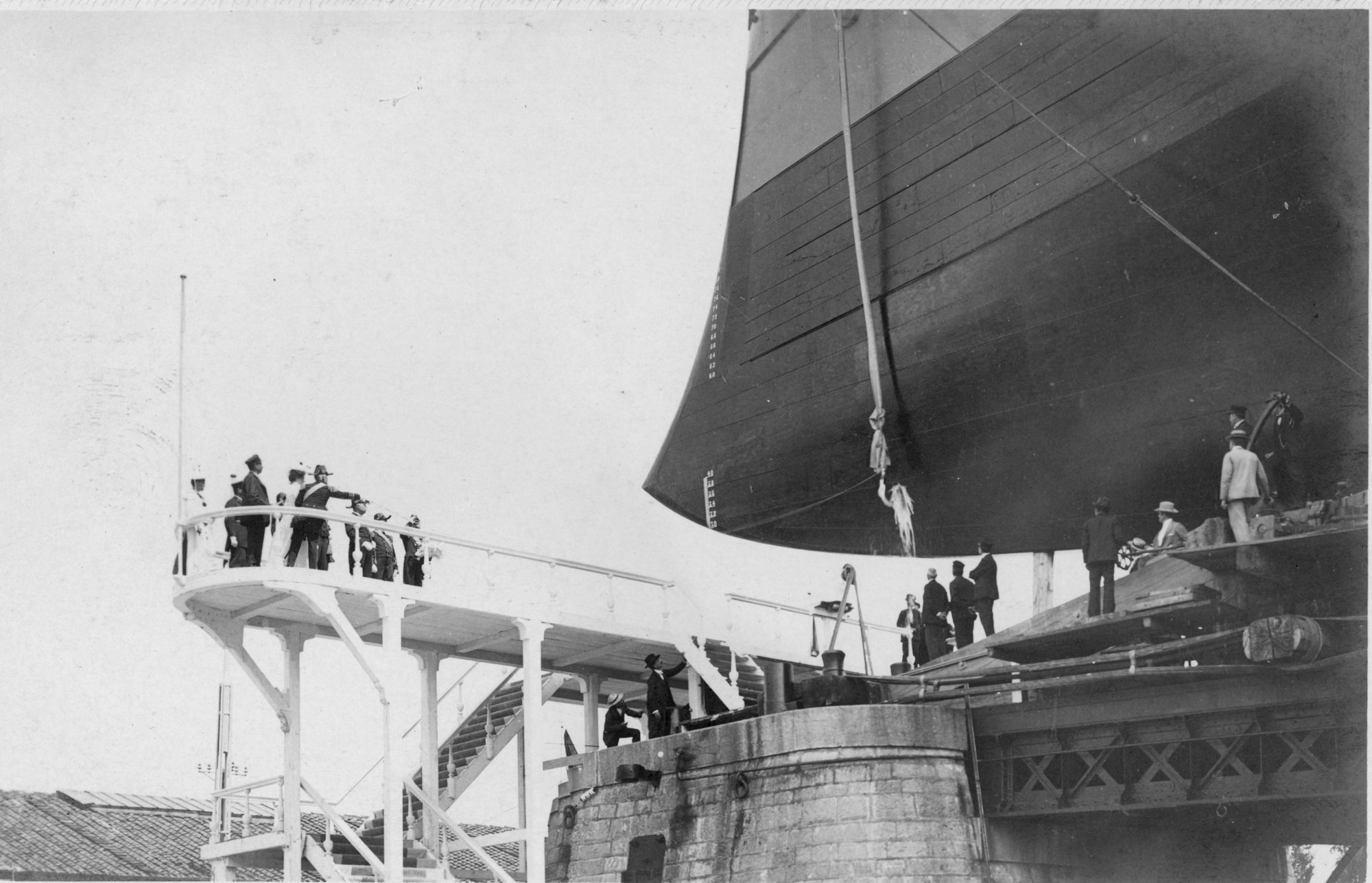
Catalogue number 136026 Launching of an Italian pre-dreadnought battleship, La Spezia. Two battleships were launched at La Spezia in the early 1900s, Regina Elena 1904 Regina Margherita 1901. The bottle has just hit the hull after being released by the lady of the platform, note ram bow and the wooden backing to take the armour plate. The ceremony doesn't appear to be a grandiose affair. 13.5cm x 8.7cm Matt gelatin silver print |
 |
|
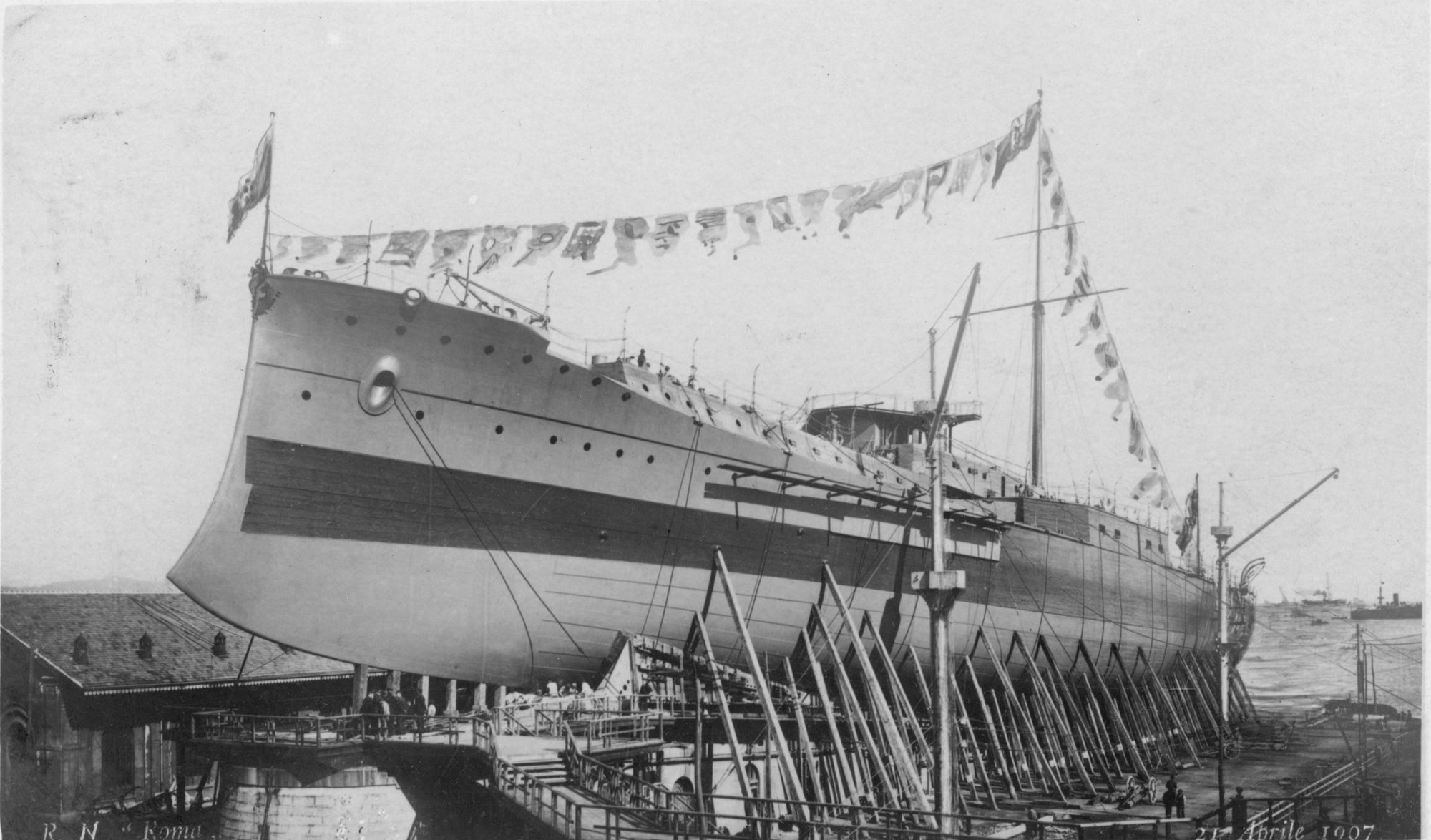
Catalogue number 136025 Pre-dreadnought battleship Roma prepared for launching, 1907 Preparations are underway for the launch of Roma at the La Spezia shipyard. Flags decorate the ship and the launching platform is in place, soon the shores will be knocked out. Recto: "RN Roma 21 Aprile 1907" Verso: Franked "Spezia" 12.8cm x 7.6cm Matt gelatin silver print |
 |
|
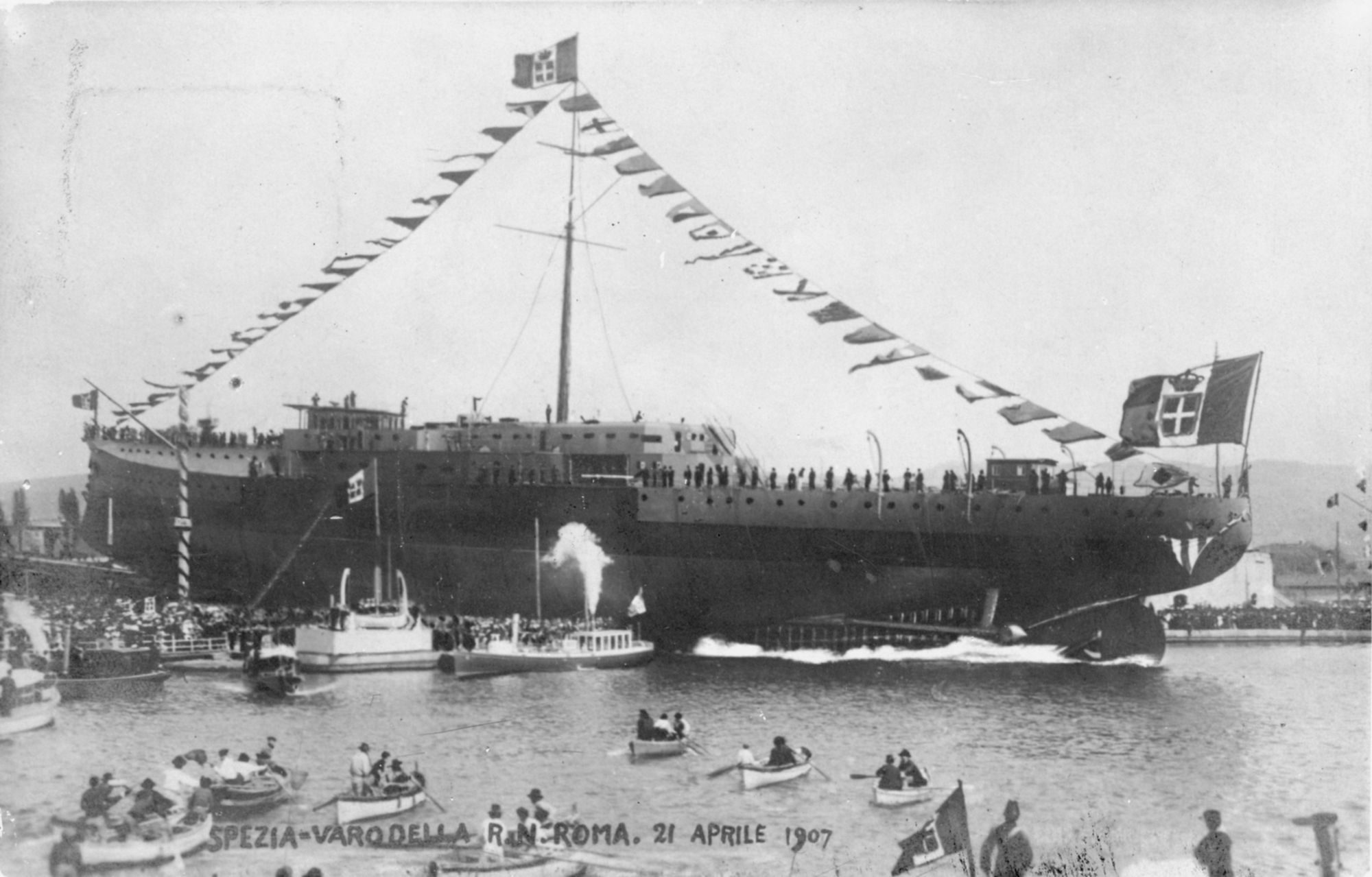
Catalogue number 123022 launch of pre-dreadnought battleship Roma Roma goes down the slipway into the sea. Note the spectators in rowing boats prudently bow on to the waves produced when the ship hits the water, a steam launch blows its whistle. 13.9cm x 9cm Matt gelatin silver print |
 |
|
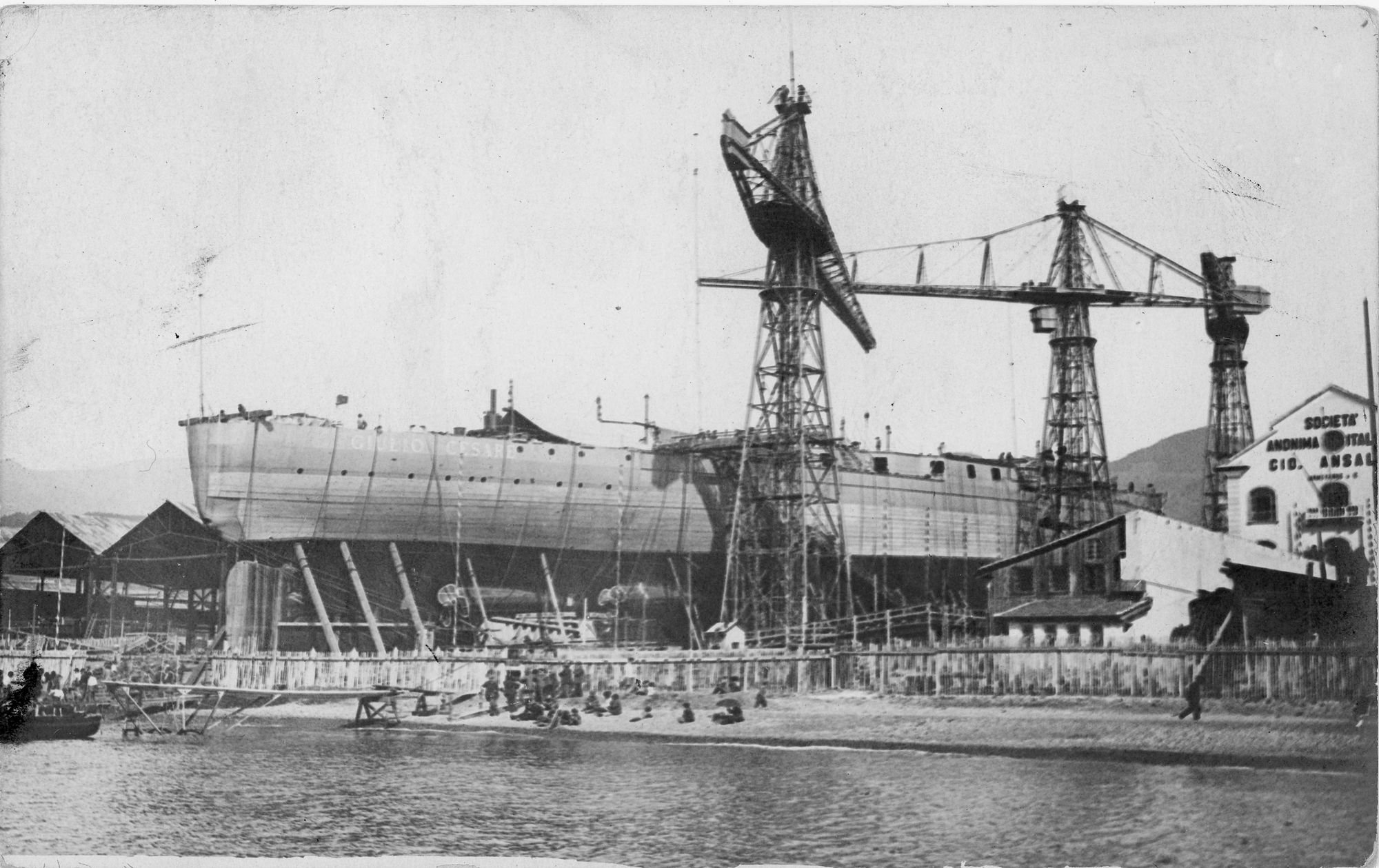
Catalogue number 104117 Italian dreadnought Giulio Cesare on the slipway Laid down in 1910, four years after the first dreadnought, and launched in 1911. An Italian naval architect Vittorio Cuniberti was the first to envisage an all-big-gun battleship in 1903 although his idea was not taken up at the time. Verso:"Giulio Cesare" in fine black ink 14cm x 8.7cm Matt gelatin silver print |
 |
|
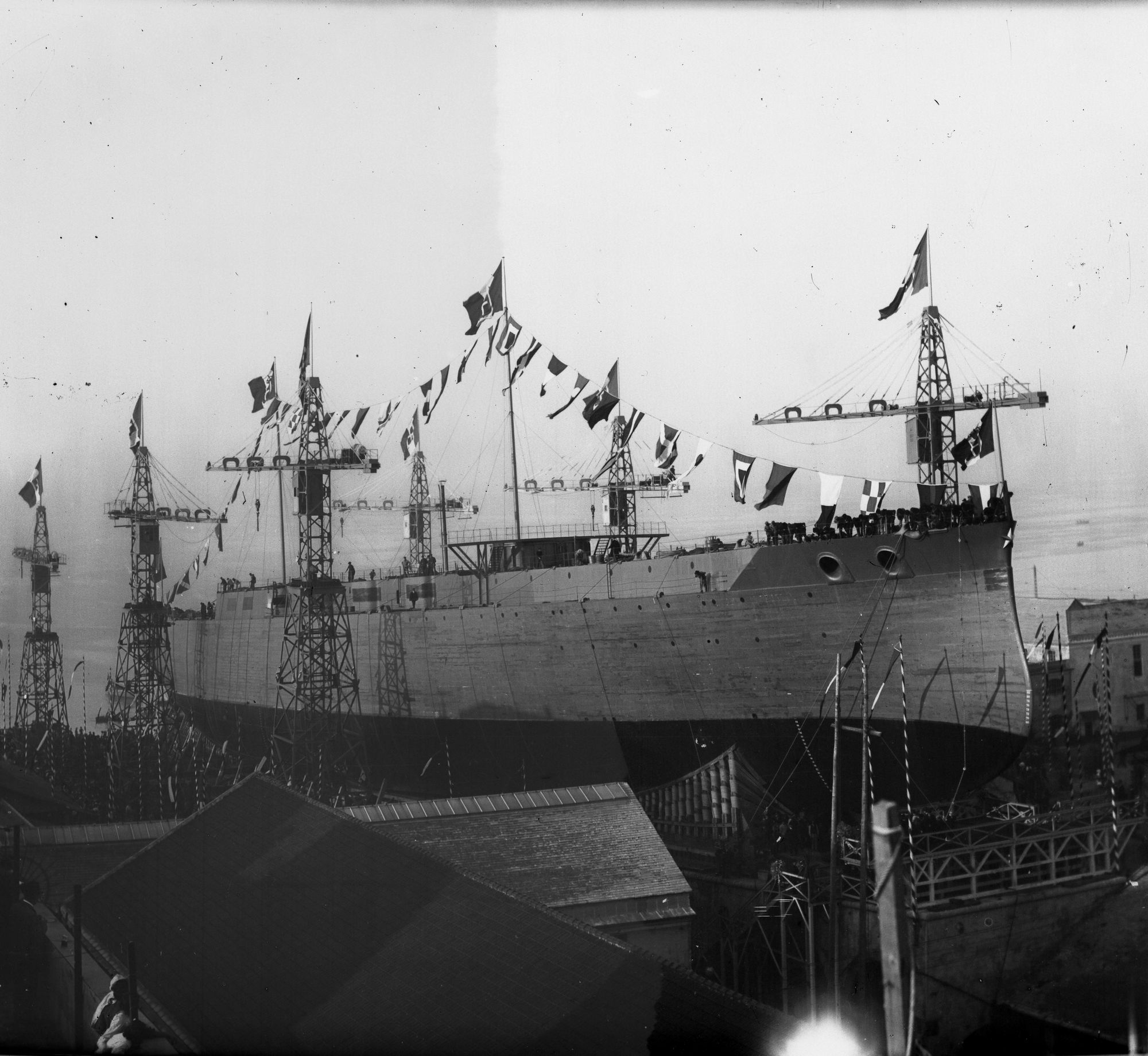
Catalogue number 93 Giulio Cesare 1911. Giulio Cesare ready to be launched, 1911, note the bottle of wine hanging from the starboard bow. The ship was built at the Ansaldo shipyard, Genoa. 17.7cm x 12.9cm Glass plate negative |
 |
|
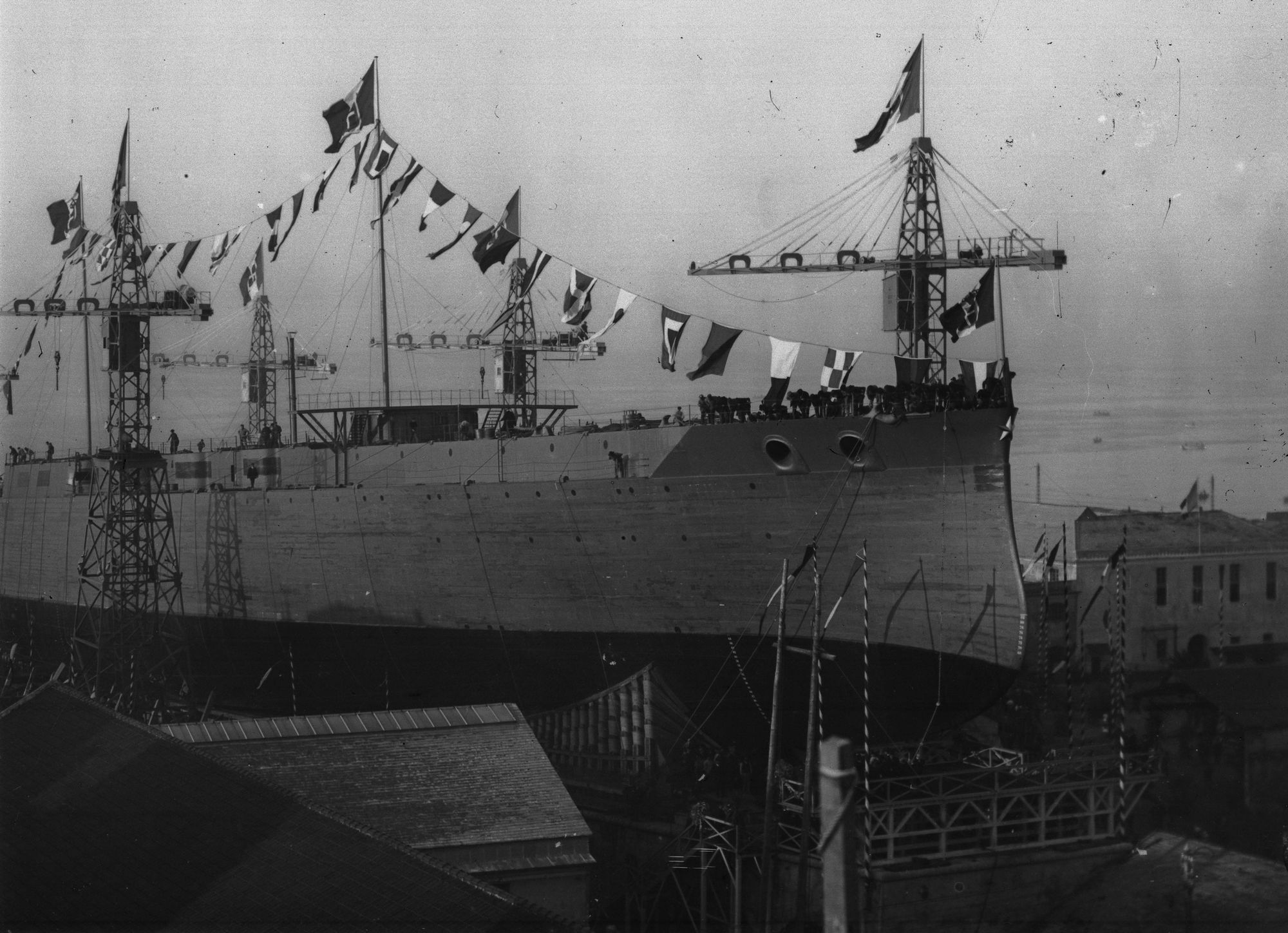
Catalogue number 93 Giulio Cesare 1911. Although the flags are out, there does not seem to be a large crowd to see the launching. 17.7cm x 12.9cm Glass plate negative |
 |
|
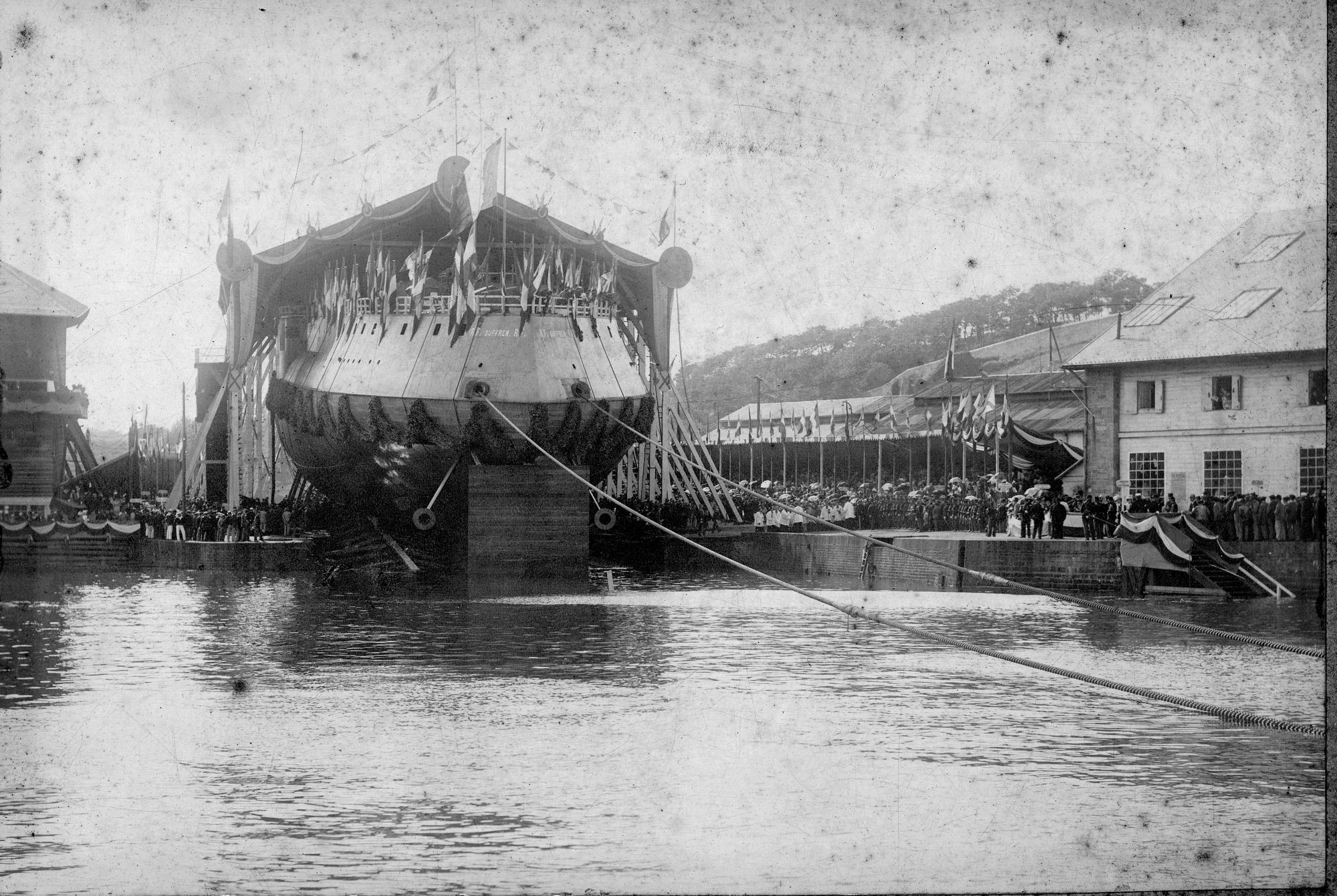
Catalogue number 90 F8 Battleship Suffren 1899 Suffren was a predreadnought battleship, laid down and launched in the same year at the Brest dockyard but already obsolete when in service in 1904 with the commissioning of the all-big-gun H.M.S. Dreadnought. It would appear to be raining, note the umbrellas. Recto:"Launch of the battleship "le Suffren", Brest 25th July 1898 (sic)" in French and in fine black ink script 22.3cm x 15.4cm Mounted albumen print |
 |
|
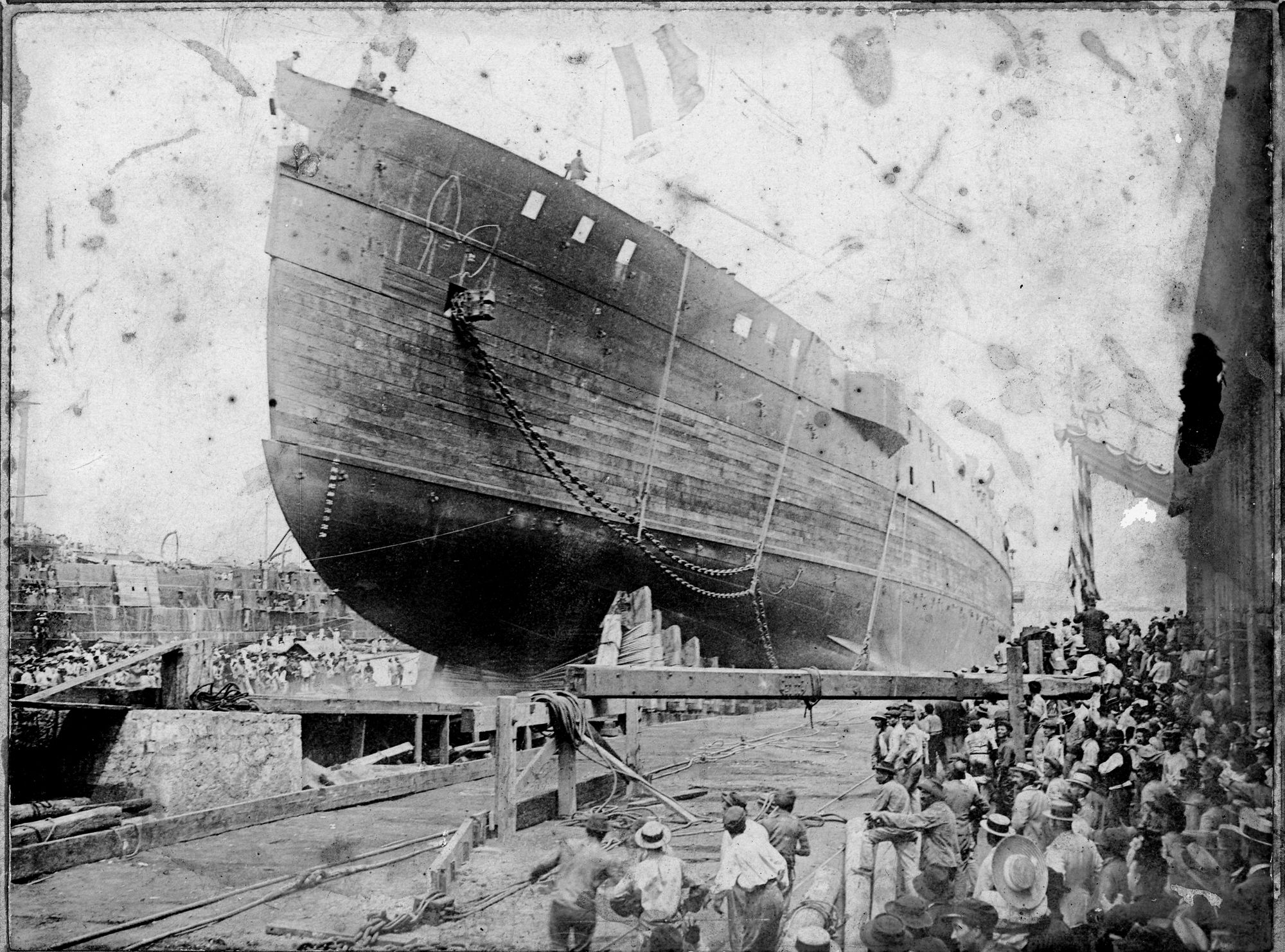
Catalogue number 135122 French warship Sully, 1901 Launched at the Forges et Chantiers de la Mediterranee in La Seyne-sur-Mer in 1901 and commissioned in 1904, Sully had a very short career. She hit a rock in the Ha Long Bay, Indochina and broke in two becoming a total loss (see photographs on the loss of the cruiser Sully in chapter Prangs, bangs and other mishaps). The launch looks to be a simple affair, shipyard workers are gathered around the slipway. Note wooden backing ready to receive the armour plate, heavy chains hanging from beams by the bow and temporarily held up along the hull to drag and slow the ship down as it enters the water. The warship in the background may be the Russian battleship Tsesarevich under construction in the shipyard at the same time as Sully. Recto:"Photographer Ch. Guès. Launch of the cruiser Sully" in French and in fine black ink script mounted 11.2cm x 8.4cm Gelatin silver print |
 |
|
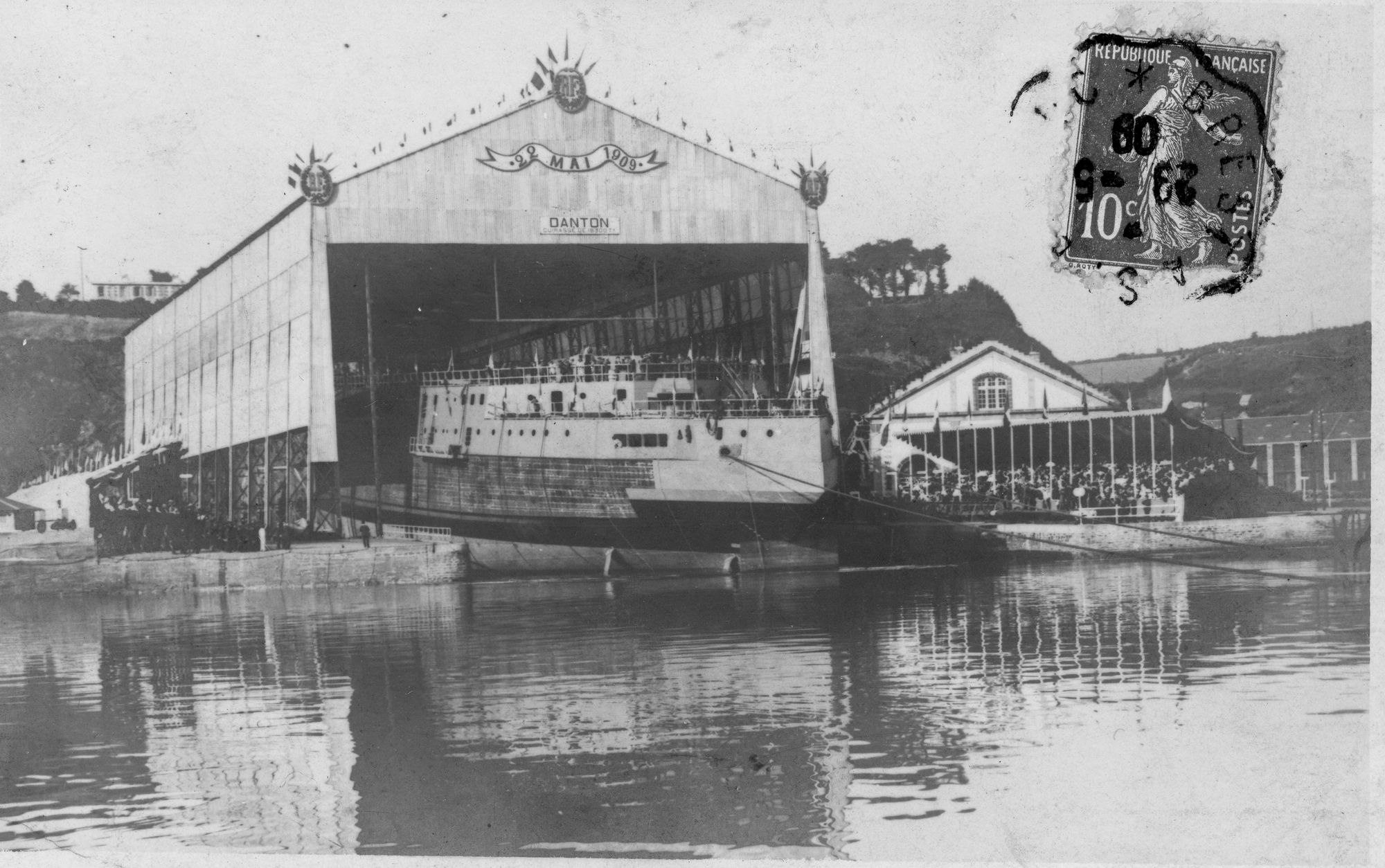
Catalogue number 134088 Battleship Danton, May 1909 On the day of the christening ceremony, Danton did not slide down the slipway as expected, this photograph was taken before the failed intervention of the two tugs. Recto: Franked Brest 29th May 1909 Verso:"....The photograph was taken a few minutes after the launch. All the grandstands are full" in French and in black ink 13.1cm x 8.3cm Matt gelatin silver print |
 |
|
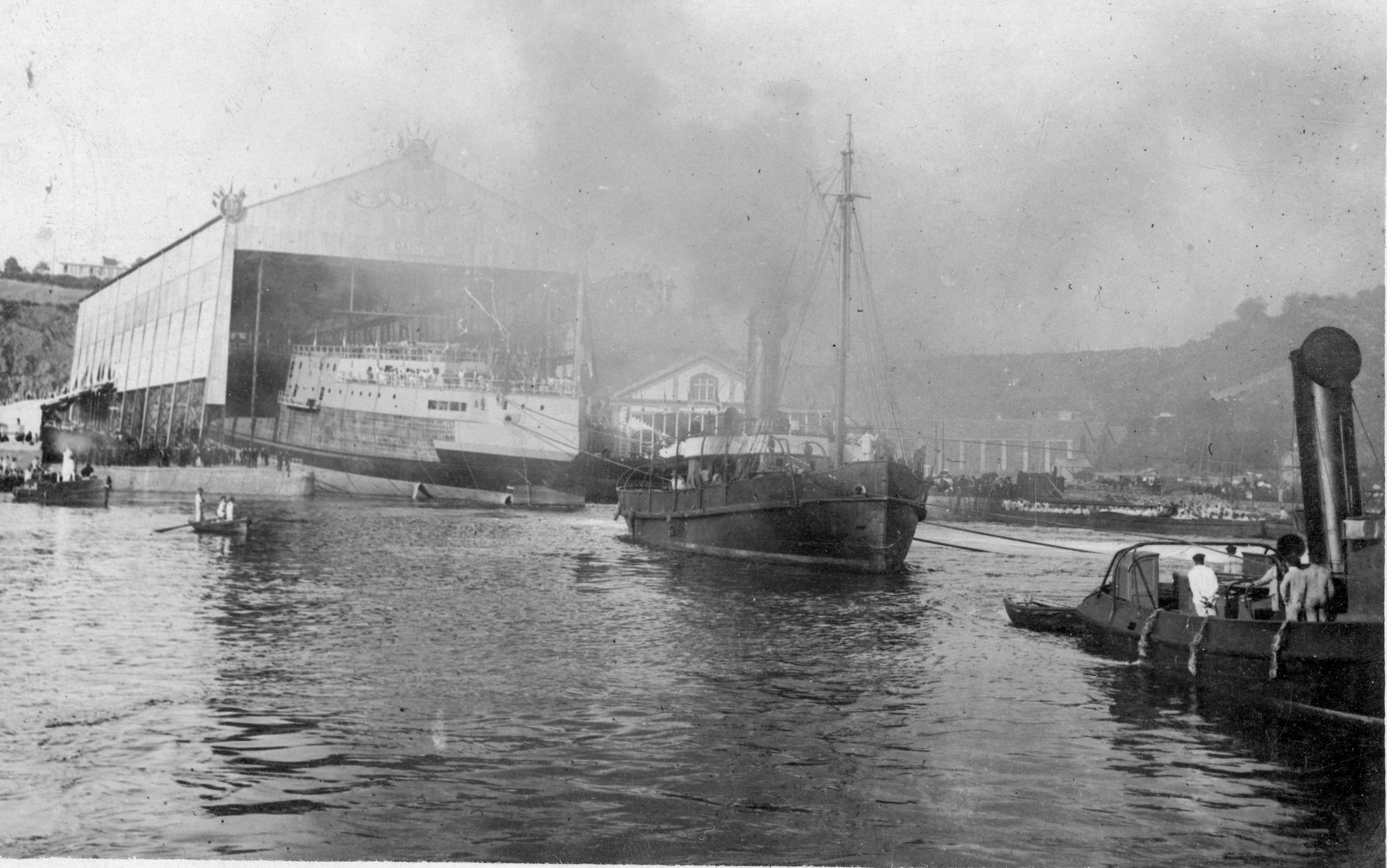
Catalogue number 136041 Danton The first attempt to launch the Danton on 22nd May 1909 was unsuccessful, the ship remaining solidly blocked on the slipway. The tugs Laborieux and Haleur were called up but were unable to pull the ship down the slipway. She was eventually launched on 4th July 1909. 13.1cm x 8.2cm Gelatin silver print |
 |
|
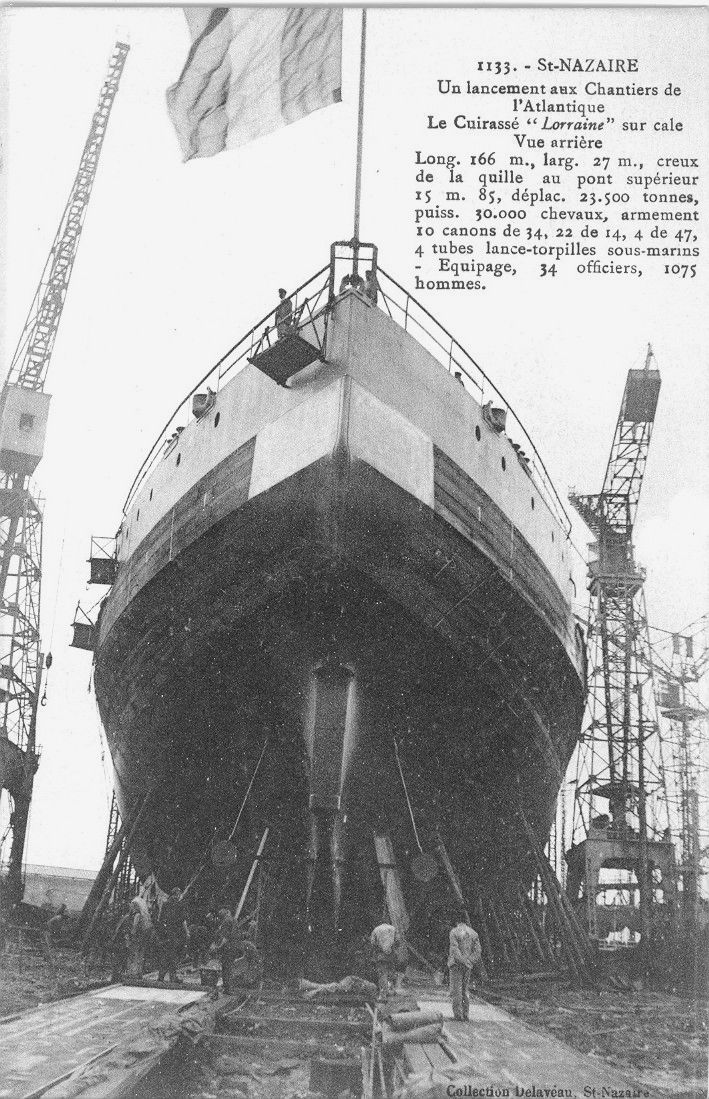
Catalogue number 1133 Launch of the French battleship Lorraine The Lorraine was launched in September 1913 at the shipyard of the Ateliers et Chantiers de St Nazaire-Penhoet. She was one of the three Bretagne class superdreadnoughts with five twin centerline turrets. 13cm x 8.2cm Printed image |
 |
|
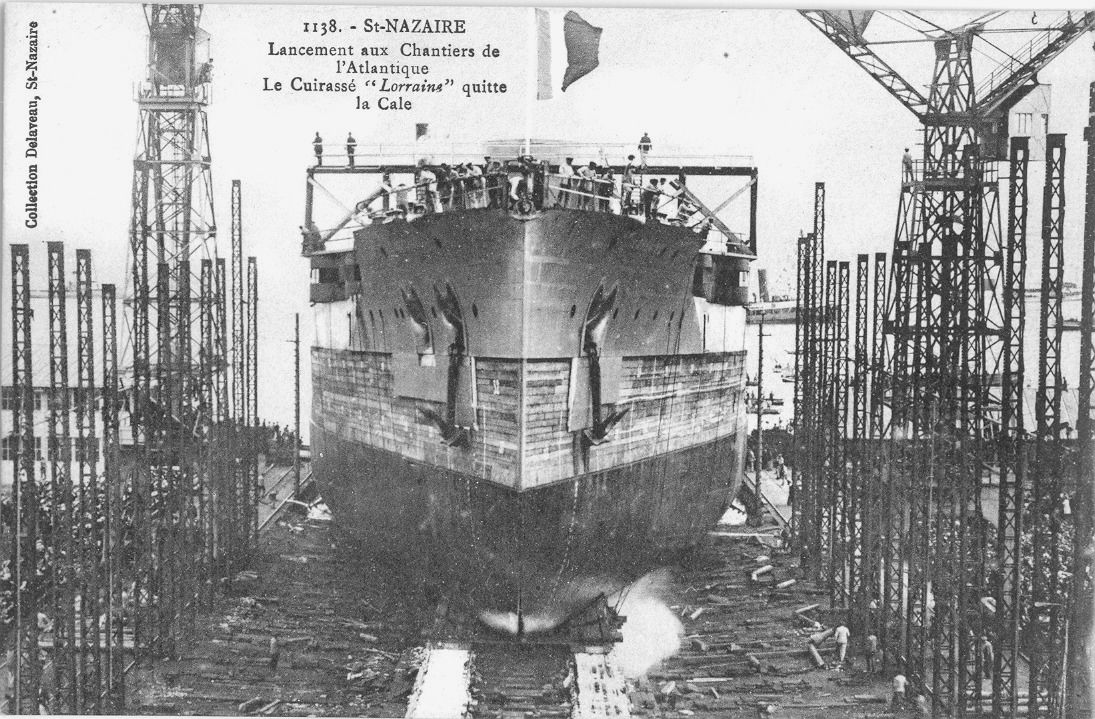
Catalogue number 1138 Launch of the French battleship Lorraine The Lorraine goes down the slipway, note the teak backing to take the armour plating, some of which is in place around the anchors. 13cm x 8.2cm Printed image |
 |
||||||||||||||||||
|
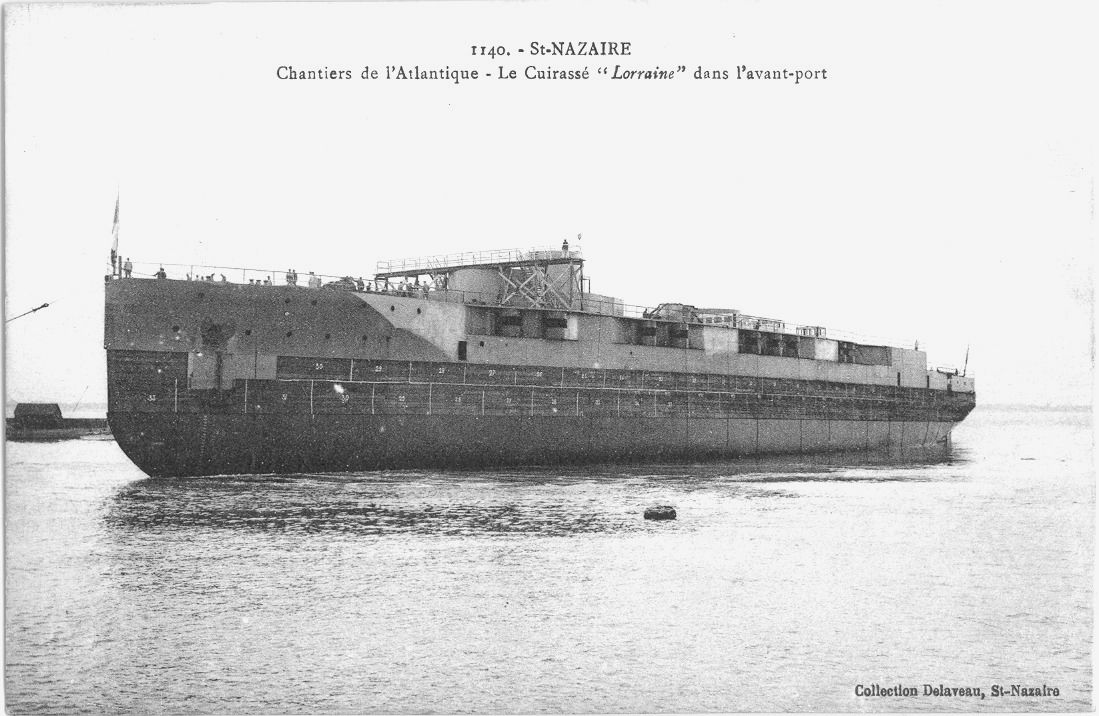
Catalogue number 1140 Launch of the French battleship Lorraine .The ship is afloat, note the numbering for each plate of armour. The main belt was 27cm thick amidships and 16 cm fore and aft. 13cm x 8.2cm Printed image |
 |
|
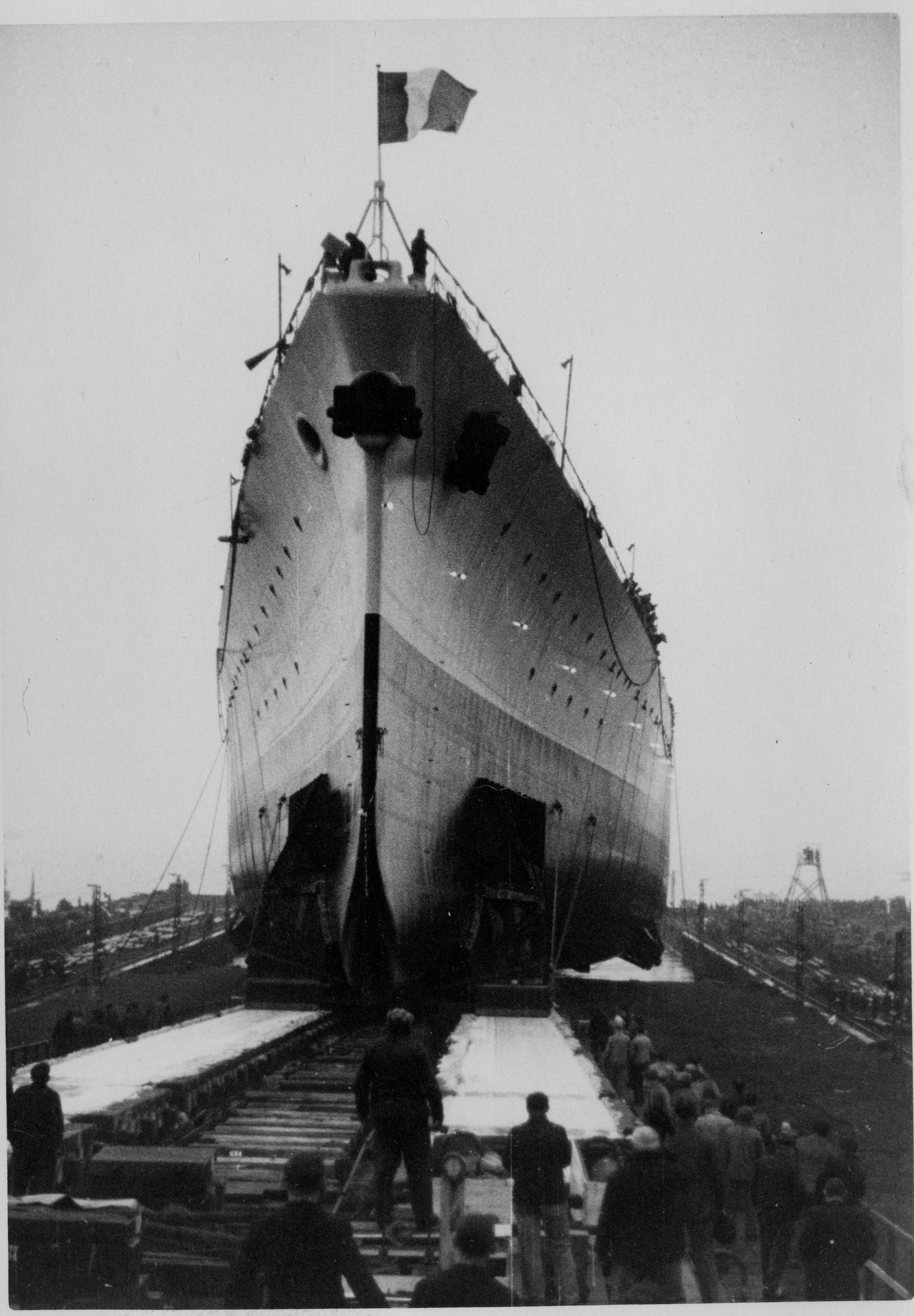
Catalogue number 24034 Launch of French battleship Strasbourg, 1936 Strasbourg goes down the slipway. The launching platform looks very basic. Credit: Courrier, St Nazaire 11.8cm x 16.7cm Gelatin silver print |
 |
|
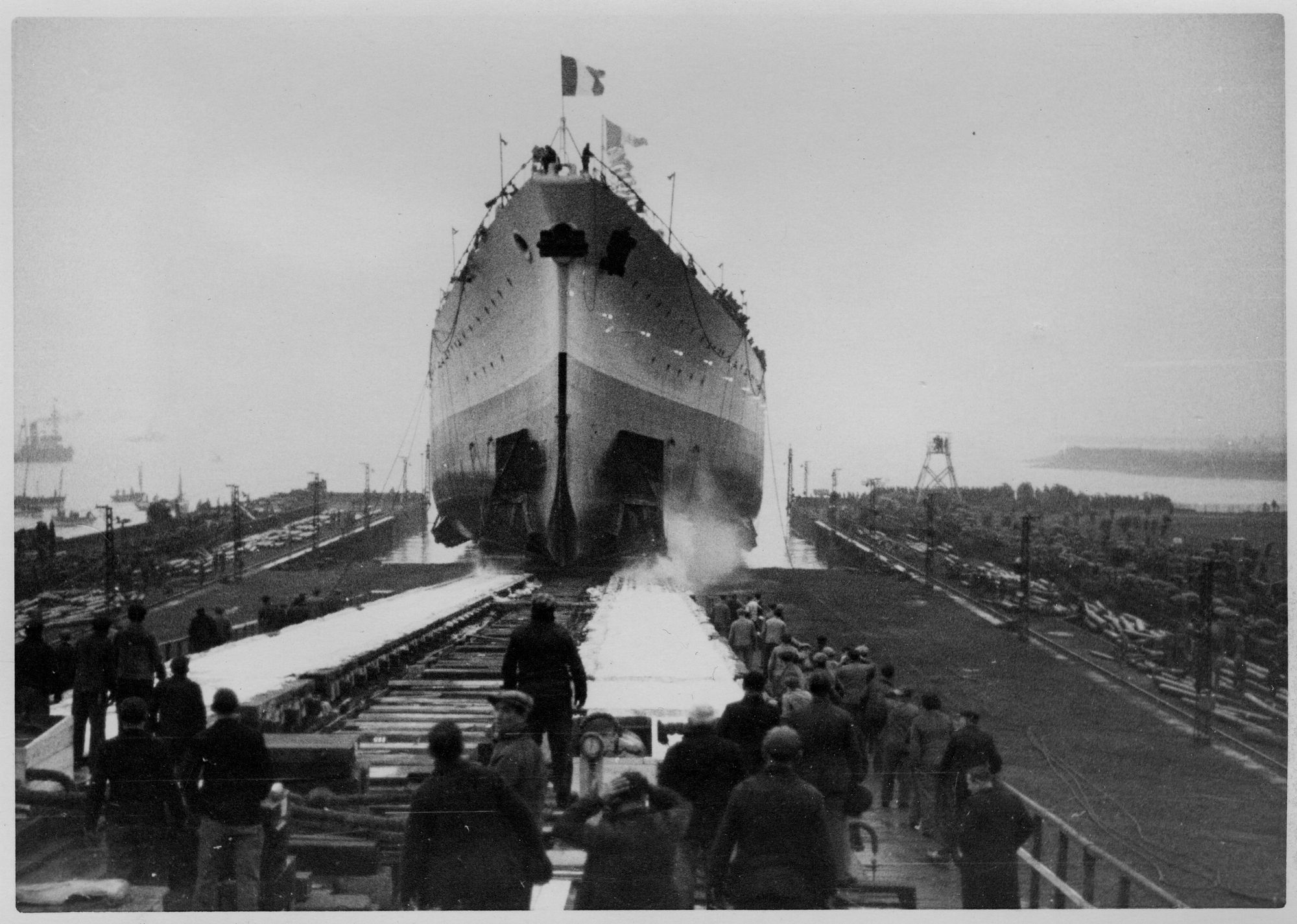
Catalogue number 24034 Launch of French battleship Strasbourg, 1936 Workmen gather around the slipway but the launching seems to be very simple with little ceremony. Credit: Courrier, St Nazaire 16.7cm x 11.8cm Gelatin silver print |
 |
|
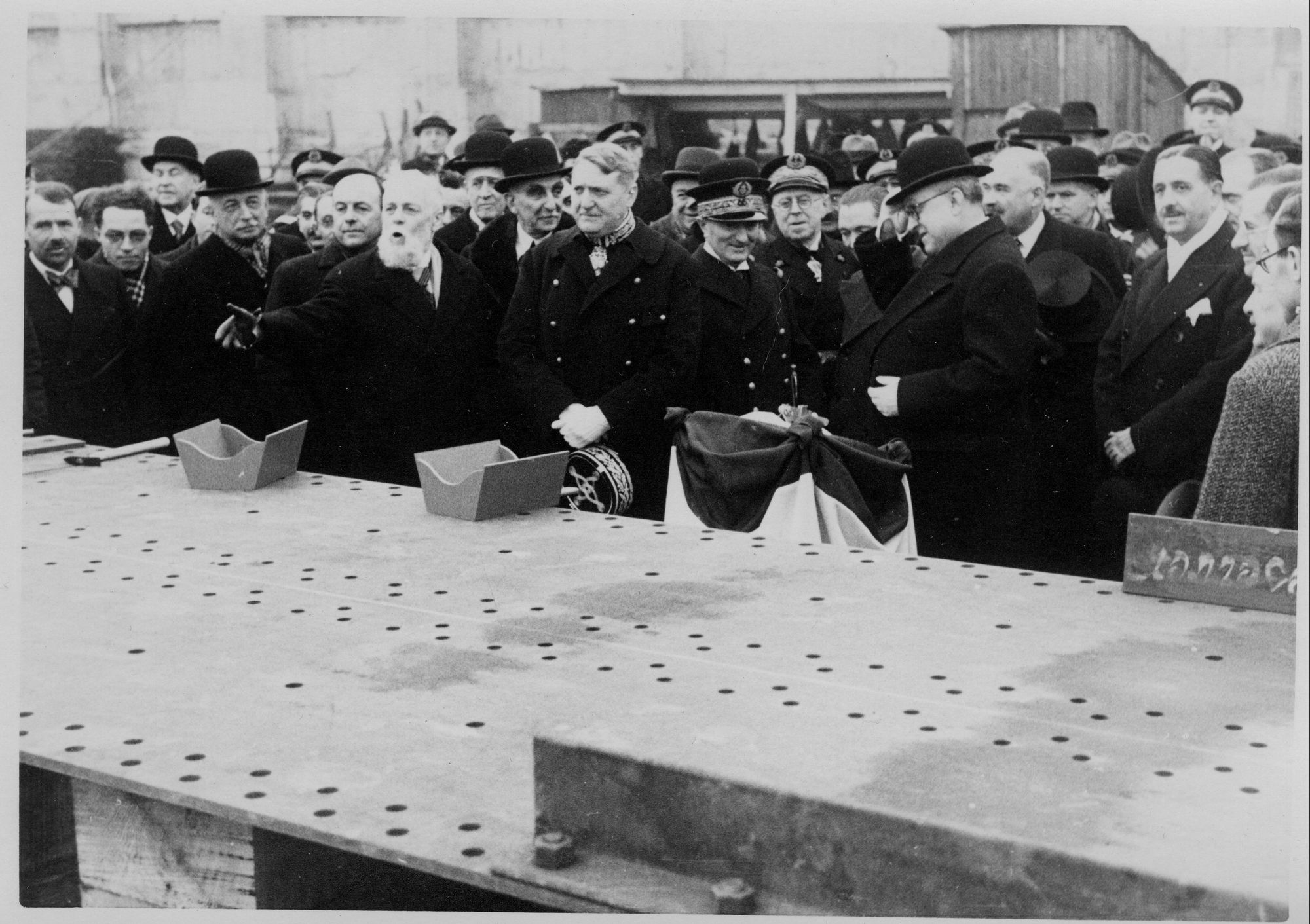
Catalogue number 24033
Laying down first plate of Jean Bart, 1936 The same day that the French battleship Strasbourg went down the slipway, the first plate of the battleship Jean Bart was laid in the same shipyard. With the clouds of war gathering, it was important to free up the slipways for further warship construction. Credit: Courrier, St Nazaire 16.8cm x 11.8cm Gelatin silver print |
 |
|
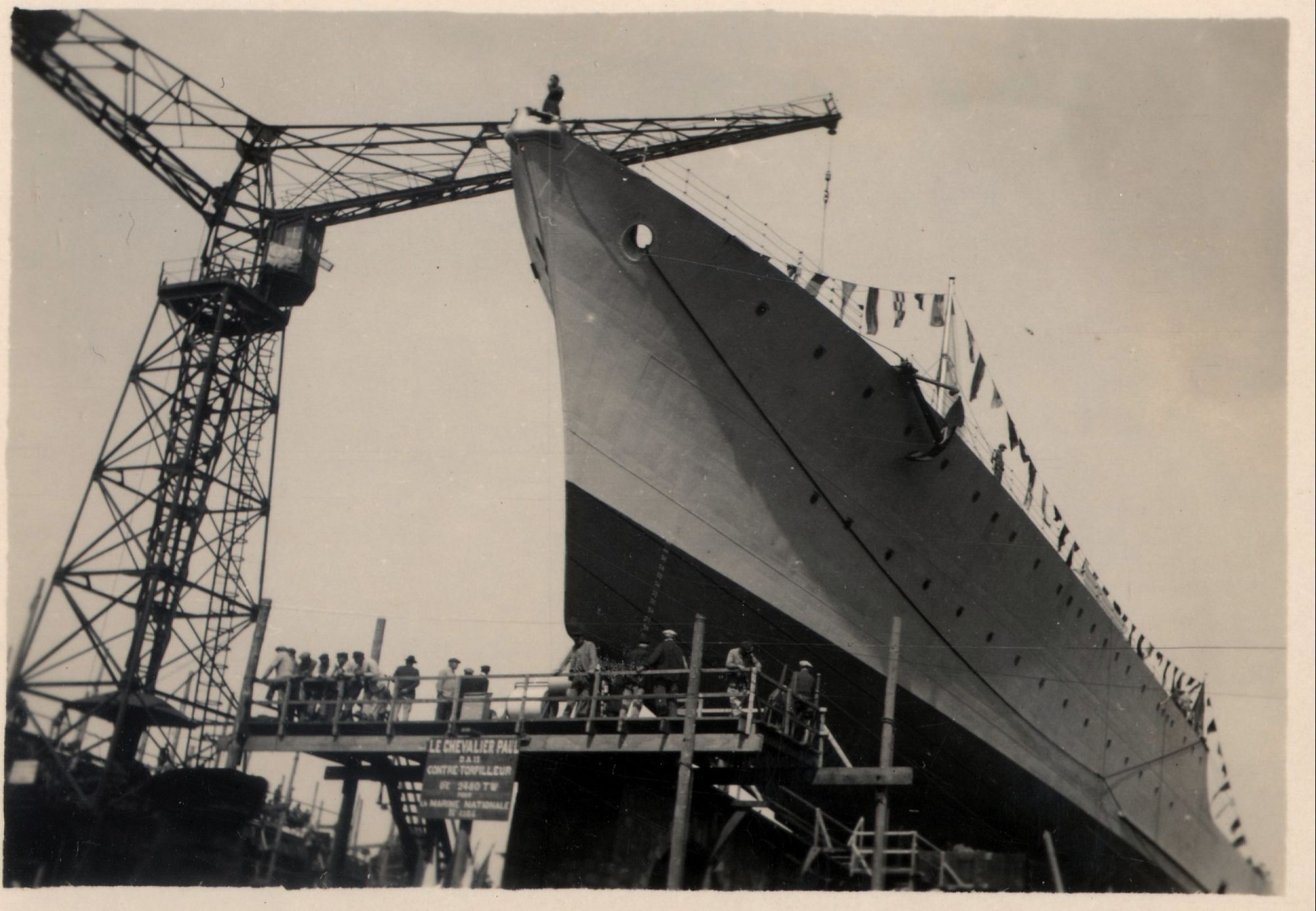
Catalogue number 16044 Launch of the French destroyer Le Chevalier Paul, 1932 The Chevalier Paul was built in the La Seyne-sur-Mer shipyard of the Forges et Chantiers de la Mediterranee. This class of large destroyer had a remarkable turn of speed reaching 36 kts in service and during trials, ships of the class exceeded the designed speed reaching 38.4 to 41 kts. 7.7cm x 5.3cm Gelatin silver print |
 |
|
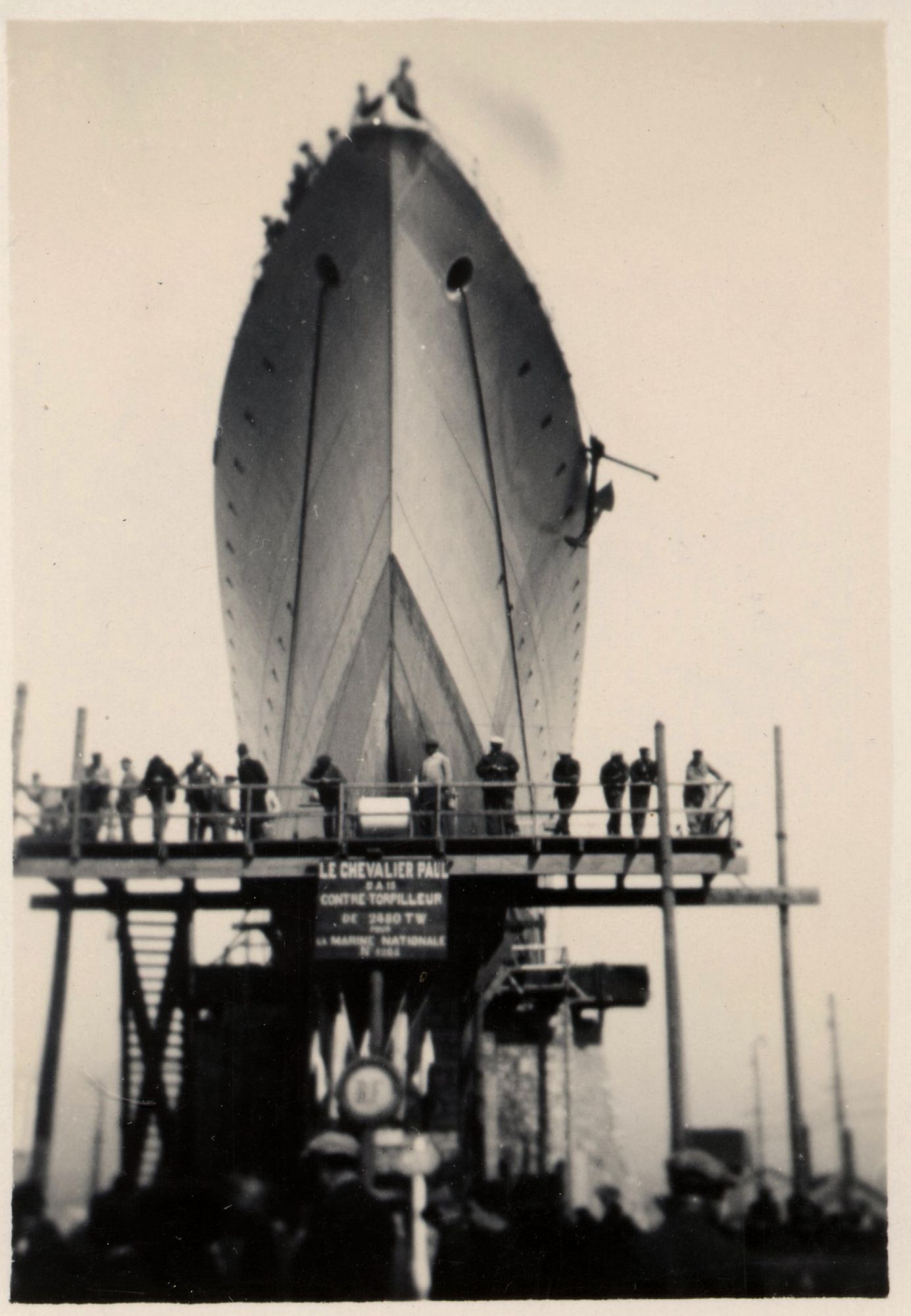
Catalogue number 16044 Launch of the French destroyer/contre-torpilleur Le Chevalier Paul, 1932 Workmen are on the launch platform, there does not seem to be any officials present. 5.2cm x 7.7cm Gelatin silver print |
 |
|
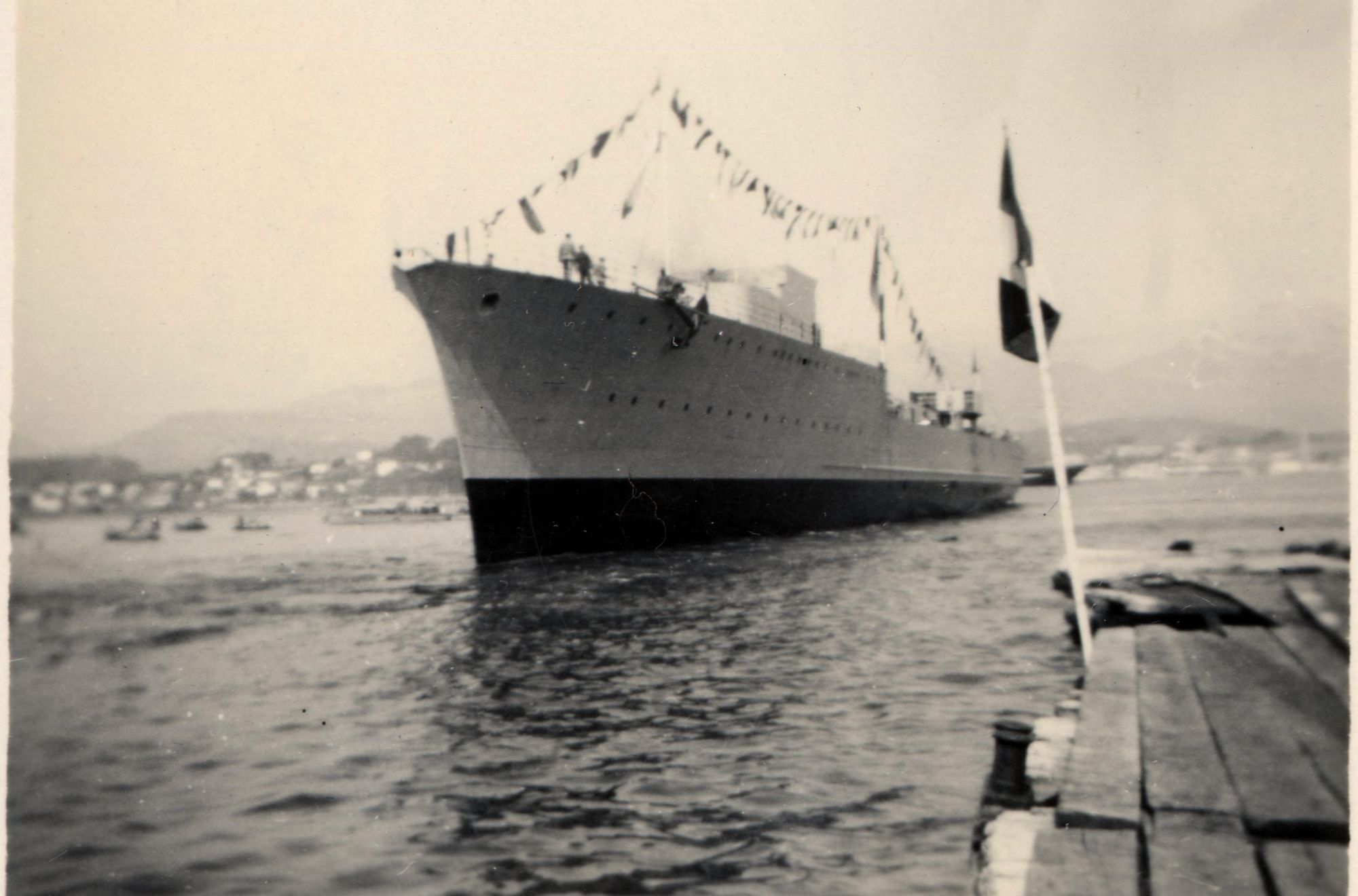
Catalogue number 16044 Launch of the French destroyer Le Chevalier Paul, 1932 Between 1923 and 1937, France built 36 destroyers. 7.7cm x 5.3cm Gelatin silver print |
 |
|
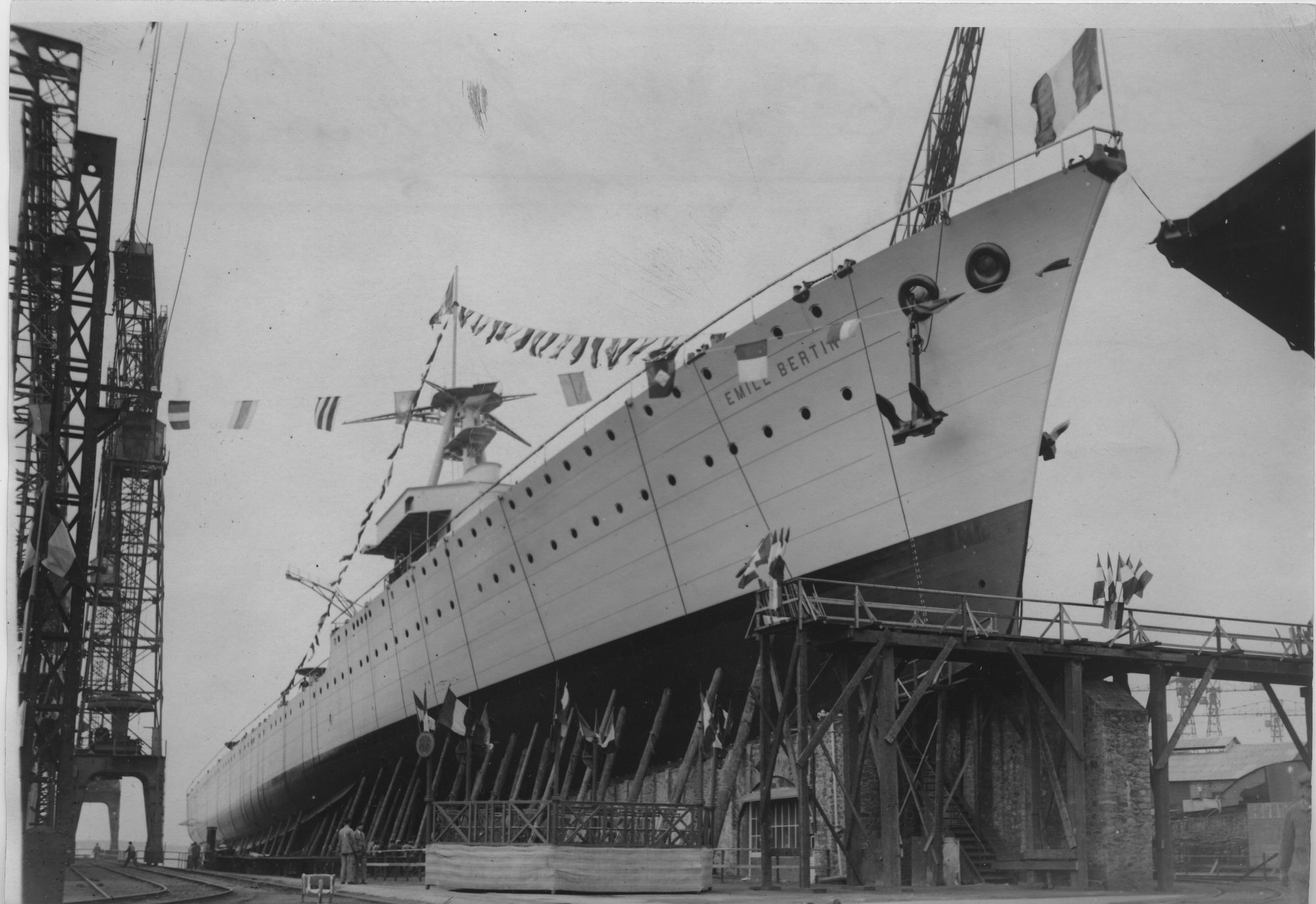
Catalogue number 25026 Emile Bertin, 1933 The light cruiser Emile Bertin was designed as a mine-layer and flotilla leader, note the very fine lines designed for speed, she hit 40 kts during trials. Verso:"Cruiser "Emile Bertin" in French and in heavy black ink "9th May 1933. Today at the Chantiers de Penhoet in Saint-Nazaire, the mine layer "Emile Bertin" was launched. Emile Bertin on the slipway. Credit: Agence Rol and The Petit Parisien & d'editions Pierre Dupuy 17.9cm x 12.2cm Gelatin silver print |
 |
|
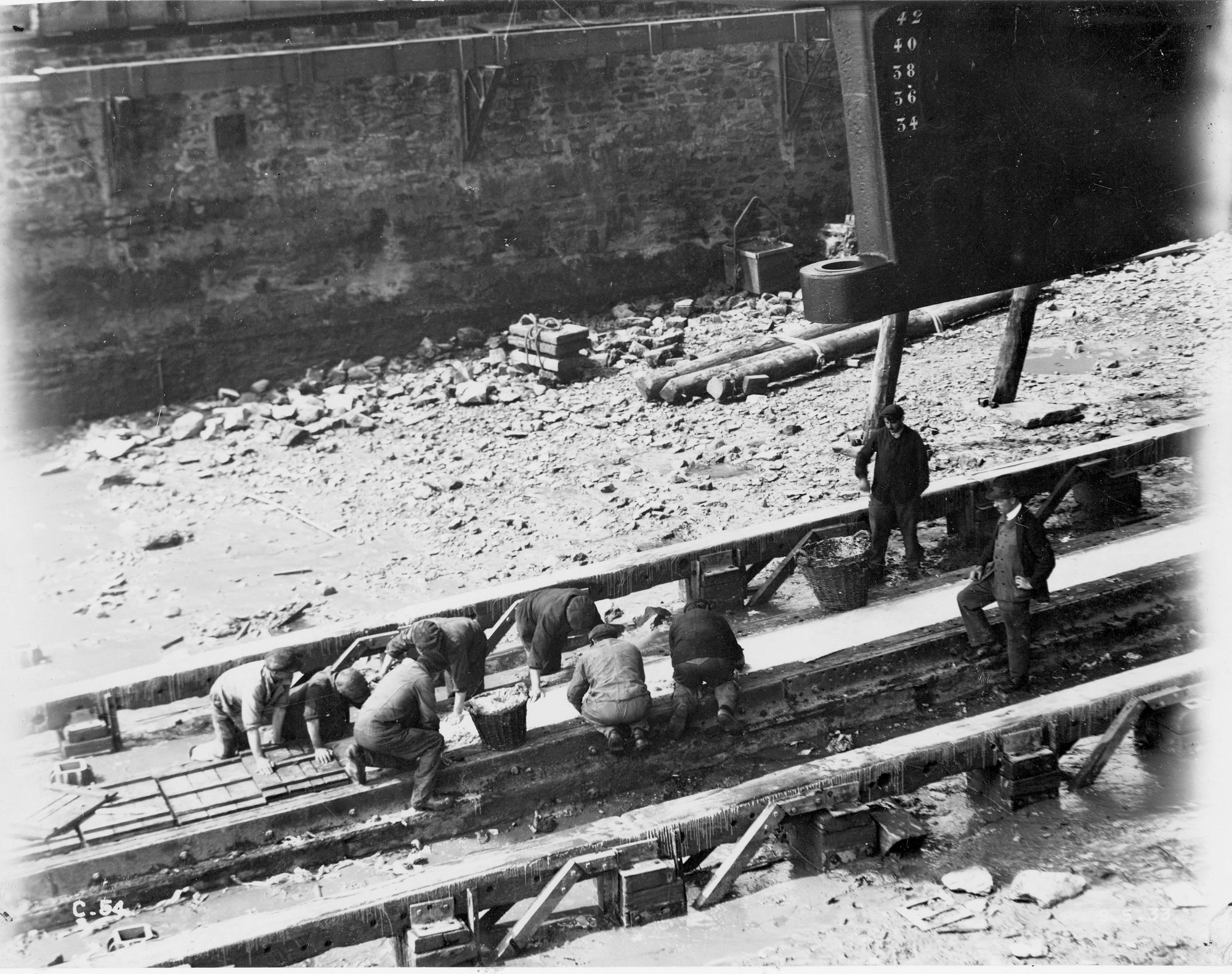
Catalogue number 160012 Emile Bertin, St Nazaire, 1933 Greasing the sliding ways, the ways must be of sufficent width so that the pressure of the ship does not force the grease from between the sliding ways and the groundways (compare the sliding ways here with those for the launch of Strasbourg). Note the dockyard foreman overlooking the work center right. Verso:"E. Bertin 9th May 1933" in French and in light pencil 21cm x 16.8cm Gelatin silver print |
 |
|
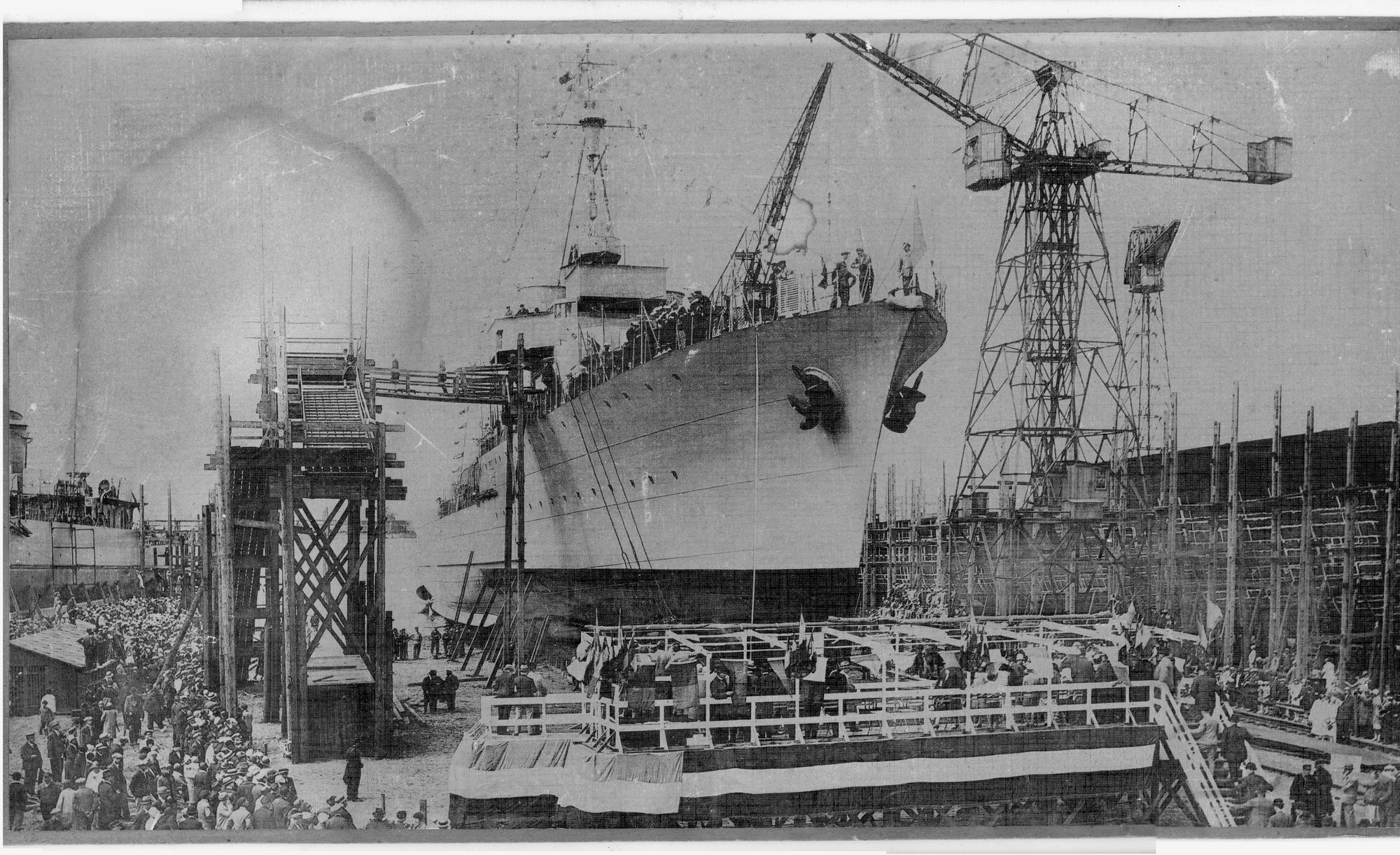
Catalogue number 87 F3 Unknown French destroyer Much is going on in this photograph of one of the 14 L'Adroit class French destroyers launched between 1926 and 1929. The launching platform is decorated with flags and the officials and guests are going up the stairs to be seated, the champagne bottle is suspended from the starboard bow, spectators are gathered around the slipway some even climbing onto the roof of a shed far left. The stairway that enables workmen to get onto the ship is still in place but the light connecting bridge can be easily removed, some stays are still in place, to be knocked out at the last minute. 35.2cm x 25cm Gelatin silver print |
 |